

UK court rules Chinese law governs claims to £3.8bn seized bitcoin haul
A London High Court judge has ruled that Chinese law governs fraud victims' claims over 61,000 seized bitcoin worth approximately £3.8 billion, boosting the UK government's chances of keeping the assets.
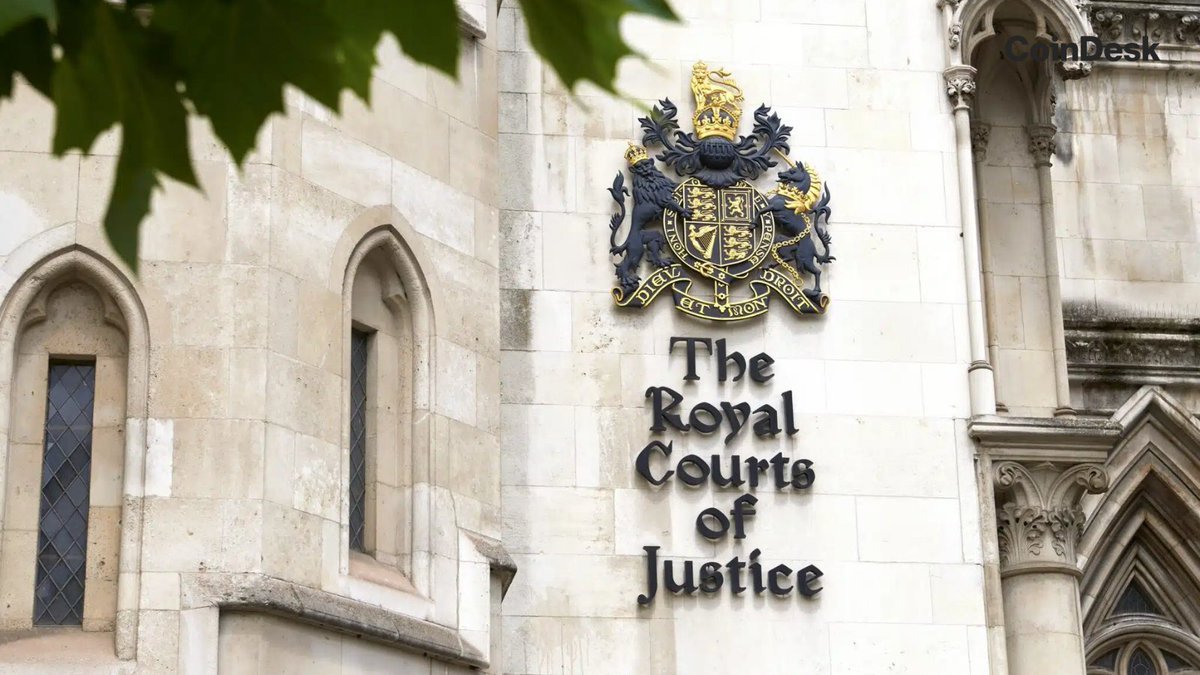
London High Court Justice Mark Turner has ruled that Chinese law, rather than English law, governs the property claims of fraud victims seeking to recover 61,000 seized bitcoin valued at roughly £3.8 billion ($5 billion). The ruling deals a blow to victims seeking to trace their funds under English property and trust rules, significantly strengthening the British government's prospects of retaining much of the crypto haul.[8][3][6][2]
The cryptocurrency was originally seized by the Metropolitan Police during an investigation into Chinese national Zhimin Qian, who pleaded guilty to running a massive investment scheme in China before fleeing to the UK in 2017. Qian's operation, run through Tianjin Lantian Gerui Electronic Technology between 2014 and 2017, collected about 40.23 billion yuan (£4.1 billion) across more than 128,000 contracts, with part of the proceeds converted into more than 100,000 bitcoin.[8][5][6]
Justice Turner rejected the investors' efforts to apply English legal principles, noting that the victims, perpetrators, transactions, and cryptocurrency purchases were overwhelmingly connected to China. Under Section 281 of Britain's Proceeds of Crime Act 2002, claimants must establish a proprietary interest in the targeted assets rather than merely show they suffered fraud losses. Final ownership of the bitcoin remains unresolved, with further hearings scheduled and lawyers for the victims planning to appeal.[8][4][7]
Key facts
- London High Court Justice Mark Turner ruled that Chinese law, not English law, governs fraud victims' claims over 61,000 seized bitcoin.
- The 61,000 bitcoin haul is valued at approximately £3.8 billion ($5 billion).
- The bitcoin was seized by the Metropolitan Police during an investigation into Zhimin Qian, who pleaded guilty to orchestrating a multi-billion-pound fraud in China.
- Qian's schemes gathered 40.23 billion yuan (£4.1 billion) from at least 128,409 investment contracts between 2014 and 2017, converting part of the proceeds into over 100,000 BTC.
- Under Section 281 of the Proceeds of Crime Act 2002, claimants must establish a proprietary interest in the assets rather than merely showing they were defrauded.
- The court ruling raises the UK government's chances of keeping the bitcoin, though final ownership remains undecided and the victims plan to appeal.
Sources · 8 sources
- CT
Coin TelegraphArticle ·
Chinese fraud victims lose key court battle over 61,000 Bitcoin Chinese fraud victims seeking to recover 61,000 seized Bitcoin face a legal setback after a UK court ruled that Chinese law governs their claims.
Open source - DE
DecryptArticle ·
UK Moves Closer to Keeping $5B Bitcoin Haul After High Court Ruling A judge ruled that Chinese law should govern fraud victims' claims to the 61,000 BTC seized from Zhimin Qian, in a blow to the claimants.
Open source - FT
Financial Times@FTPost on X ·
UK chances of keeping £3.8bn bitcoin haul rise after High Court ruling https://t.co/ZOCT4v4oNw
Open source - TB
The Block@TheBlockCoPost on X ·
THE BLOCK: A UK High Court judge has ruled that Chinese law governs fraud victims' claims over 61,000 bitcoin:native seized by British authorities, worth approximately $5 billion. The decision could strengthen the UK government's chances of retaining much of the funds, according to the FT, though ultimate ownership remains unresolved and an appeal is being pursued.
Open source - CO
CoindeskArticle ·
UK court ruling boosts government’s chances of keeping $5 billion in seized bitcoin The decision concerns 61,000 BTC seized by the Metropolitan Police in its investigation into Zhimin Qian, who pleaded guilty to defrauding thousands of people in China.
Open source - SI
Solid Intel 📡@solidintel_xPost on X ·
INTEL: The UK could keep $5 billion in seized bitcoin:native after a court ruled Chinese law governs fraud victims' ownership claims | per Financial Times https://t.co/yeshAp8S5P
Open source - AI
Analytics Insight@analyticsinmePost on X ·
𝗨𝗞 𝗖𝗼𝘂𝗹𝗱 𝗞𝗲𝗲𝗽 𝗚𝗕𝗣 𝟯.𝟴 𝗕𝗶𝗹𝗹𝗶𝗼𝗻 𝗶𝗻 𝗦𝗲𝗶𝘇𝗲𝗱 𝗕𝗶𝘁𝗰𝗼𝗶𝗻 𝗔𝗳𝘁𝗲𝗿 𝗖𝗼𝘂𝗿𝘁 𝗥𝘂𝗹𝗶𝗻𝗴 UK could retain GBP 3.8 billion (USD 5 billion) in seized Bitcoin after a court ruled that Chinese law governs claims from fraud victims. The decision affects efforts to recover 61,000 BTC, but ownership remains unresolved as lawyers prepare an appeal. #Bitcoin #BTC #CryptoNews #BitcoinSeizure #CryptoFraud #AnalyticsInsight #AnalyticsInsightMagazine Read More 👇 https://t.co/xrZtBZlqDb
Open source - CR
CryptoSlateArticle ·
A $5 billion Bitcoin fortune is at stake, but UK court says being defrauded isn’t enough to claim it A London judge rejected Chinese fraud victims' bid to use English law to claim more than 61,000 seized Bitcoin. In an Oct. 12 ruling , High Court Justice Mark Turner sided with British prosecutors, determining that Chinese law must govern ownership claims over the cryptocurrency, currently worth approximately $5 billion. “The applicable law is Chinese law,” Turner wrote in the judgment, rejecting arguments that English property and trust principles should determine the investors' entitlement. The decision leaves thousands of victims facing a potentially difficult recovery battle, as proving they lost money to the fraud does not automatically establish ownership of the Bitcoin acquired with its proceeds. How a Chinese investment fraud became a $5 billion Bitcoin dispute The case stems from investment schemes operated by Zhimin Qian through Tianjin Lantian Gerui Electronic Technology and associated businesses between 2014 and 2017. According to the judgment's agreed factual background, the schemes collected approximately 40.23 billion yuan (£4.1 billion) through at least 128,409 investment contracts. However, the court cautioned that the number of contracts should not be mistaken for the number of individual victims. The records also revealed substantial repayments to some participants. Approximately 34.1 billion yuan (£3.4 billion) flowed back to investors during the scheme's operation, although others received nothing. Qian converted part of the proceeds into Bitcoin, including purchases of more than 100,000 BTC through an account on cryptocurrency exchange Huobi , alongside over-the-counter transactions conducted in China. After fleeing China in 2017, she relocated to Britain, where authorities subsequently seized devices, private keys and other assets linked to more than 61,000 Bitcoin . The recovered cryptocurrency became the subject of civil recovery proceedings initiated by Britain's Director of Public Prosecutions under the Proceeds of Crime Act 2002. Chinese investors later sought to establish ownership of the coins, arguing that English legal principles could let them trace their stolen investments into the cryptocurrency Qian acquired. They argued that fraudulent investment contracts could be rescinded, creating trust-based ownership interests that followed the money into Bitcoin. British prosecutors opposed that approach, maintaining that the original transactions and alleged acquisition of ownership rights occurred in China . Turner agreed, finding that the investors, perpetrators, payments and cryptocurrency purchases were overwhelmingly connected to China. The judge also rejected the argument that Bitcoin's eventual presence in Britain should determine which country's property laws applied. Instead, he focused on the legal relationships established when the investors collected the investments and later converted them into cryptocurrency. That conclusion defeated the investors' attempts to rely on English law or combine English and Chinese legal principles to establish their claims. Victims must now prove ownership as recovery battle enters next stage The next proceedings will determine whether Chinese law recognizes the ownership interests investors assert in the recovered Bitcoin. Under Section 281 of Britain's Proceeds of Crime Act, claimants must establish a proprietary interest in assets targeted for recovery, rather than merely demonstrate that criminals owe them compensation. Turner emphasized that the provision “does not create any broader compensation scheme” for people who suffered financial losses through criminal conduct. Consequently, investors may need to establish how Chinese law treats fraudulent investment contracts, whether ownership rights survive the conversion of stolen funds into cryptocurrency and whether those rights extend to the particular assets held by British authorities. The scale and structure of Qian's operation could complicate those proceedings. The scheme involved multiple bank accounts, investment arrangements and repayments, leaving individual claimants with potentially different financial histories. The judgment also leaves the precise operation of Chinese law unresolved. Although Turner decided that Chinese law governs the underlying claims, the court has yet to receive evidence establishing its relevant provisions or the factual basis of each investor's asserted ownership. The victims advanced an alternative argument that English law should apply until Chinese law was formally established. Turner rejected that submission, distinguishing the choice of governing law from the evidence needed to establish its contents. “The two should not be conflated,” he wrote. The litigation also involves receivers appointed to Tianjin Lantian Gerui at the initiative of one alleged victim. Those receivers have asserted separate claims over assets held by British prosecutors. Turner described the validity of that route as “a question for another day,” leaving another potential complication for the eventual distribution of the cryptocurrency. Lawyers representing the fraud victims plan to appeal the ruling, according to the Financial Times, potentially prolonging the dispute over the seized assets. For British authorities, the decision removes one proposed route investors sought to use to establish ownership under English law. It does not determine how much Bitcoin, if any, will ultimately remain available for government recovery. Turner said he would hear further submissions on the precise order implementing his judgment. The court will need to establish the applicable Chinese property rights and examine individual claims before it can determine which portions of the cryptocurrency belong to successful applicants. The post A $5 billion Bitcoin fortune is at stake, but UK court says being defrauded isn’t enough to claim it appeared first on CryptoSlate .
Open source