

Bitcoin rebounds toward $84,000 ahead of US inflation data
Bitcoin bounced toward $84,000 after defending weekly support near $82,500, though analysts warn that overhead seller resistance and macroeconomic headwinds loom ahead of the upcoming U.S. inflation report.
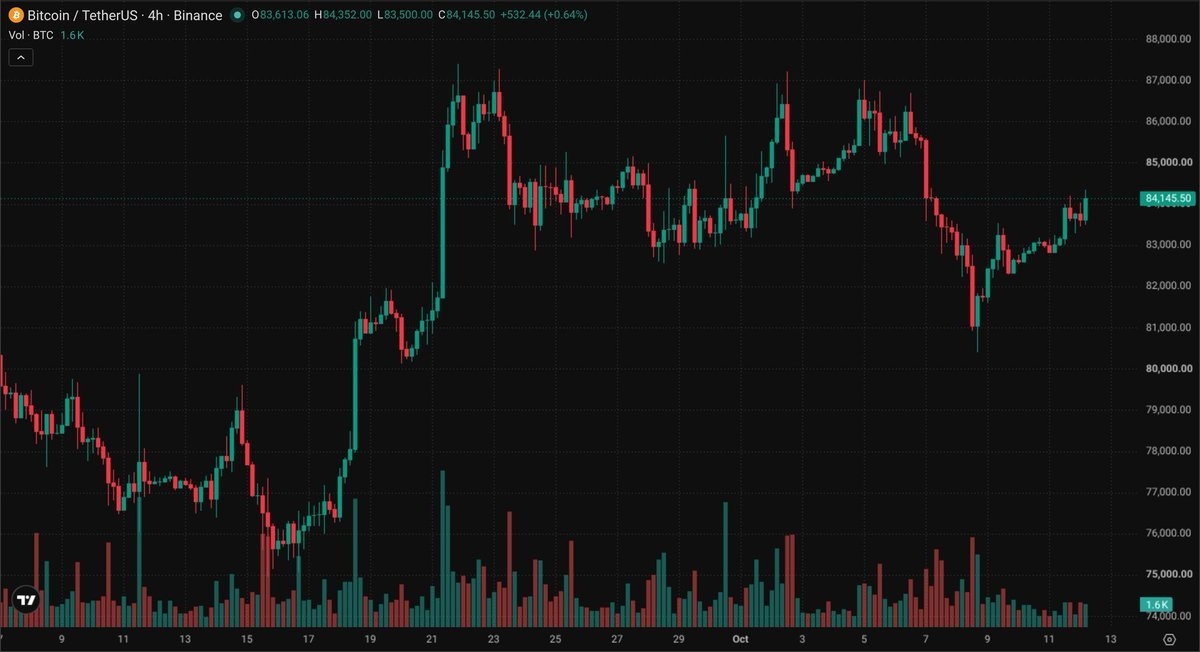
Bitcoin has rebounded toward $84,000 after dropping toward $80,000 last week, defending key weekly support around $82,500. A chart shared by trader @KookCapitalLLC showed Bitcoin trading at roughly $84,145 on Binance, with the trader claiming spot exchange-traded funds brought in $681 million in inflows during the prior week. The bounce gained momentum over the weekend as the spot Bid/Ask Ratio climbed to 0.3, according to CryptoQuant analyst J.A. Maartunn, reflecting stronger buying interest relative to sell orders.[1][4][5]
The cryptocurrency now faces a notable hurdle between $84,000 and $85,000. Checkonchain data highlighted by analyst Darkfost showed that roughly 53% of Bitcoin's invested capital had an acquisition price above $83,000, with the $84,000 to $85,000 zone marking the largest concentration of investor cost basis. If sellers absorb the recovery and momentum stalls, Darkfost identified the $77,000 to $79,000 range as potential support.[4]
Macroeconomic factors are also keeping traders cautious ahead of the upcoming U.S. consumer price index release. According to reports from Decrypt and CoinDesk, Treasury yields at two-decade highs and dollar strength continue to restrain market risk appetite, even as odds of an October Federal Reserve rate hike slump. In the wider market, Ethereum recovered above $2,500, though Alphractal CEO Joao Wedson cautioned that its $26.5 billion derivatives market remains exposed to forced liquidations as major players reduce bullish exposure.[2][3][4][5]
Key facts
- Bitcoin preserved key weekly support around $82,500 and climbed toward $84,000 after falling to roughly $80,000.
- Trader @KookCapitalLLC shared a chart showing Bitcoin at $84,145 on Binance and claimed spot ETFs saw $681 million in inflows the prior week.
- Checkonchain data showed about 53% of Bitcoin's invested capital had an acquisition cost above $83,000, with the heaviest concentration situated between $84,000 and $85,000.
- Analyst Darkfost identified $77,000 to $79,000 as potential support if Bitcoin fails to clear the $84,000-$85,000 resistance zone.
- CryptoQuant analyst J.A. Maartunn reported that Bitcoin's spot Bid/Ask Ratio rose to 0.3 as a buy order wall formed below the market.
- Traders are bracing for volatility around the U.S. CPI release as two-decade-high Treasury yields and a firm dollar weigh on risk appetite.
- Ethereum rebounded above $2,500, but Alphractal CEO Joao Wedson warned its roughly $26.5 billion derivatives market remains vulnerable to liquidations.
Sources · 5 sources
- KO
kook@KookCapitalLLCPost on X ·
i said buy the $80k wick etfs dumped $681m into it last week and bitcoin:native is $84k today thank you etfs https://t.co/JzRtaTE70U
Open source - CO
CoindeskArticle ·
Bitcoin falls below $83,000 as dollar strength keeps markets on edge Bitcoin and gold hold steady as a firm dollar and rising bond yields weigh on sentiment, while IREN secures a multiyear cloud services deal with Anthropic.
Open source - DE
DecryptArticle ·
Bitcoin Ranges Near $83K as Traders Look to US Inflation Data October rate-hike odds have slumped, but analysts say Treasury yields at two-decade highs are still keeping a lid on risk appetite.
Open source - CR
CryptoSlateArticle ·
Bitcoin’s rebound approaches the $85,000 zone where past buyers may sell Bitcoin and Ethereum extended their weekend recovery, although on-chain indicators and derivatives positioning suggest the rebound faces significant obstacles. Data from CryptoSlate showed that Bitcoin briefly climbed above $84,000 after falling toward $80,000 during last week's selloff. Ethereum also recovered above $2,500, reversing part of its recent losses as buying activity returned to the cryptocurrency market. However, Bitcoin's advance has brought it closer to a major concentration of investor acquisition costs between $84,000 and $85,000, where selling pressure could intensify. Meanwhile, Ethereum's recovery comes as larger derivatives traders appear to be reducing their bullish exposure despite substantial outstanding positions. Bitcoin's $85,000 resistance threatens to stall recovery Bitcoin's recovery gained momentum during Sunday's trading session as traders appeared to capitalize on a liquidity concentration above the prevailing market price. CryptoQuant analyst J.A. Maartunn said on Oct. 11 that a liquidity cluster formed just above Bitcoin's trading level, giving traders an opportunity to push prices higher. According to Maartunn, traders appeared to establish a substantial wall of buy orders beneath the market, providing support as Bitcoin advanced toward the overhead liquidity. The spot Bid/Ask Ratio, which measures buying and selling liquidity within 1% of the prevailing price, rose to 0.3. The increase indicated that visible buying interest had strengthened relative to selling orders. Such liquidity can also disappear if traders cancel their orders. Checkonchain data highlighted by analyst Darkfost on Oct. 11 showed that approximately 53% of Bitcoin's invested capital had an estimated acquisition price above $83,000 when the cryptocurrency traded around that level. The measure weights acquisition prices by invested capital, so larger positions carry more weight. More importantly, the largest concentration of acquisition costs sits between $84,000 and $85,000, making the region a potential obstacle to further gains. Bitcoin Invested Wealth (Source: Checkonchain) Investors who acquired Bitcoin around those levels could become more willing to sell as prices approach their estimated cost basis, increasing the supply that buyers must absorb. A sustained move through the region would suggest buying demand is strong enough to overcome that potential selling pressure. If it fails to do so, Bitcoin could be vulnerable to another decline, with Darkfost identifying the $77,000 to $79,000 range as a possible support area. Ethereum's $2,500 rebound faces risk from leveraged traders Ethereum's recovery faces another challenge as derivatives positioning among larger market participants continues to deteriorate. Alphractal CEO Joao Wedson noted on Oct. 10 that Ethereum's 30-day and 180-day open-interest deltas were both negative, along with weakening readings in its Whale vs. Retail Delta indicator. He interpreted the combination as evidence that major traders have reduced their bullish exposure while increasingly favoring defensive or short positions. The negative open-interest readings indicate that outstanding derivatives positions have contracted over the measured periods. Despite the contraction, Ethereum's total futures open interest remained substantial at approximately 10.58 million ETH, indicating that considerable derivatives exposure was still outstanding. Ethereum Total Open Interest (Source: Alphractal) Valued at $2,500 per ETH, that represents roughly $26.5 billion in notional exposure. The combination of weakening bullish positioning and substantial remaining exposure increases the potential for sharp price movements if volatility returns. A renewed decline could push leveraged long positions toward forced liquidation, potentially adding selling pressure and accelerating losses. Conversely, a sustained recovery could force short sellers to close positions, contributing to further upward momentum. Wedson warned that Ethereum's derivatives market remains vulnerable to further liquidations despite the recent reduction in outstanding positions. The post Bitcoin’s rebound approaches the $85,000 zone where past buyers may sell appeared first on CryptoSlate .
Open source - CT
Coin TelegraphArticle ·
BTC price support holds ahead of US CPI data: Three things Bitcoin traders need to know this week Bitcoin traders braced for inflation-based volatility after BTC price action preserved key weekly support around $82,500.
Open source