

OpenAI publishes 722 AI-generated math manuscripts on GitHub
OpenAI has published 722 mathematical manuscripts generated by an unreleased internal model, asserting solutions to hundreds of open problems while mathematicians question the unverified findings.
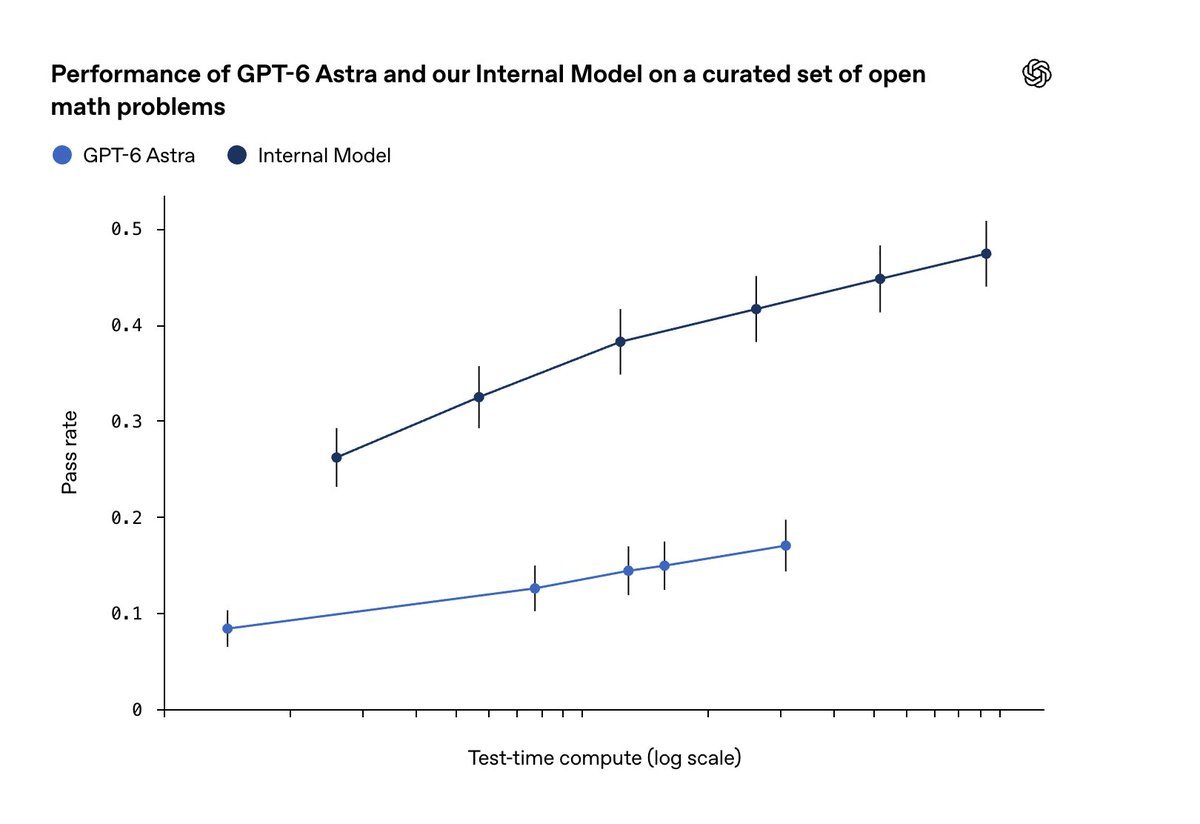
OpenAI has released a collection of 722 AI-written mathematical manuscripts across 372 result families in a public GitHub repository. The company claims the papers were produced by an unreleased internal frontier model and include solutions to hundreds of long-standing open problems. Decrypt reported that OpenAI said most of the manuscripts were generated from a single prompt.[2][1][5][7][8]
OpenAI stated that it consulted the independent Advisory Group on Mathematics and Artificial Intelligence at the Institute for Advanced Study to develop release practices, including protocols for paper revisions and citations. The company attributes the work to a model whose training started on August 28 and notes an average compute cost equivalent to roughly three hours of ChatGPT Pro thinking per result.[2][1][3][8]
The release arrives a month after an announced Navier-Stokes breakthrough triggered backlash within the academic community. Quartz reported that OpenAI ignored a key request from mathematicians in issuing the new materials. Several mathematicians have labeled the claims unverified and called for supporting evidence, echoing earlier concerns reported by WIRED over aggressive tactics from major AI firms.[4][6][7][9]
Key facts
- OpenAI published 722 AI-generated math manuscripts spanning 372 result families on GitHub.
- The manuscripts were created by an unreleased internal frontier model whose training began on August 28, 2026.
- OpenAI claims the papers contain solutions to hundreds of open math problems, with most generated from a single prompt.
- OpenAI drew on guidance from the Institute for Advanced Study's Advisory Group on Mathematics and Artificial Intelligence to design its publication protocols.
- OpenAI reported an average compute cost per result equal to roughly three hours of ChatGPT Pro thinking.
- Mathematicians cited the findings as unverified and requested supporting evidence, with Quartz reporting that OpenAI bypassed a key request from the math community.
Sources · 9 sources
- CH
Chubby♨️@kimmonismusPost on X ·
A few thoughts on OpenAI’s latest mathematics announcements. History was made yesterday. I say that without exaggeration, even though I am not a mathematician myself, because numerous mathematicians have confirmed it. Leading experts in their fields see this as a historic breakthrough. Hundreds of problems that had remained unsolved for decades, problems that some of the brightest minds had wrestled with, were solved in a remarkably short time by OpenAI’s new internal model. OpenAI’s repository contains 722 manuscripts grouped into 372 result families. Two things are particularly important here: -OpenAI attributes its earlier reported solution to the Navier-Stokes Millennium Prize Problem and its subsequent mathematical results to the new internal model whose training began on August 28. OpenAI’s September update OpenAI describes this model as significantly more capable than GPT-6 Astra and says its performance continued to improve during training. That supports the claim of substantial progress. I would expect further improvements since those announcements. But the timing figures need care. - For Navier-Stokes, OpenAI reports that the group which produced the result involved around 10,000 concurrent agents. The result arrived about 88 hours after the first agents were launched, followed by another 17 hours for Lean formalization and verification. For the new collection, OpenAI reports an average compute cost equivalent to roughly three hours of ChatGPT Pro thinking per result. That hints to an immense increase in efficiency and capabilities within a very short period of time. I am convinced that we have now entered the age of the intelligence explosion. I mean that without exaggeration and with complete conviction. We can see it. Anyone with eyes can see it. Anyone with ears can hear it. Anthropic and OpenAI are competing to publish the biggest scientific breakthroughs as quickly as possible. And there is something we should keep in mind: To me, the message is: There is no wall. There is no end in sight. None of the scientists working there has even remotely suggested that these models are now hitting a limit or reaching a plateau. Quite the opposite: they all say the models are becoming faster and more capable. Of course, that also raises questions about safety. But that is not what I want to discuss today. Instead, I want to draw attention to two things. 1. What is OpenAI’s current focus? I mean this neither unkindly nor as an accusation. OpenAI has explicitly identified building an automated AI researcher as a goal. It also discontinued Sora’s web and app experiences on April 26, 2026. I read that decision as a sign of greater focus, although the discontinuation alone does not establish the company’s broader priorities. OpenAI’s stated goals, Sora discontinuation Against that backdrop, I wonder how releases such as its always-on agents fit alongside these significant research advances. OpenAI’s agent announcement Some of the presentation feels childish and playful to me, and unnecessary in comparison with Anthropic. It makes me wonder whether OpenAI risks drifting off course again and directing important resources elsewhere. That is a concern, not an established account of how the company allocates its resources. More a question than an answer. 2. 2026 feels like the turning point Regardless of that, one thing is clear to me: this year feels like a turning point. 2026 is the year of agents. Claude Code helped pave the way. Its public research preview launched on February 24, 2025 and got its big hype by end of 2025, and by 2026, agents were becoming increasingly embedded in research workflows. Claude Code’s launch, OpenAI’s research experience I expect agents to become even more capable in 2027. My prediction is that 2027 will also be the year when superintelligence becomes a reality. That is a forecast I believe in. I am reminded of Dario Amodei’s essay Machines of Loving Grace. He described the possibility of powerful AI arriving as early as 2026, while explicitly acknowledging that it could take much longer, but to me it seems his forecast was acorrect. If we already think this year has been completely wild and almost impossible to keep up with, then I believe 2027 will be the year when we find ourselves in a constant state of amazement. Now is the time to talk about the future. It will not wait for us. We need to consider what a new society could look like. AI agents will take over work, first in white-collar occupations and then increasingly elsewhere. We need to discuss how we understand work and, above all, how wealth will be distributed if jobs disappear without being replaced. I do believe that will happen. That does not have to be entirely negative. It could also be an opportunity, because I believe people will always find meaning for themselves. A simple example: anyone can buy chairs at IKEA. Yet plenty of people still build their own in their spare time. People find meaning in their work, even without paid employment. But for many, paid employment will be the first thing to disappear. These are thoughts I would like to discuss. The future is now. Everything will change. There is no going back.
Open source - OP
OpenAI@OpenAIPost on X ·
We’re releasing a broad range of new mathematical results produced by an internal frontier model. We’ve been consulting with the independent Advisory Group on Mathematics and Artificial Intelligence at the Institute for Advanced Study, and we have drawn on their advice and public recommendations to inform how we release these results. https://t.co/7N6TPlft1P
Open source - TE
Techmeme@TechmemePost on X ·
OpenAI releases a range of new mathematical results produced by an internal model, with details like estimations of compute spent in terms of ChatGPT Pro usage (OpenAI) (Visit Techmeme dot com for the link and full context!)
Open source - WI
WIRED@WIREDPost on X ·
“There's a perception of mobster behavior” from leading AI companies, one mathematician tells WIRED as OpenAI prepares to release more than 100 new solutions to unsolved problems. https://t.co/vkNfaI76p5
Open source - MT
MTS@MTSlivePost on X ·
SITUATION DETECTED: OpenAI has released a GitHub repository with over 700 math problems solved by its models. https://t.co/7P9Q3uDJpj
Open source - DE
Decrypt@DecryptMediaPost on X ·
OpenAI Says a Secret AI Model Cracked Hundreds of Open Math Problems in One Prompt—Mathematicians Want Receipts https://t.co/N8NK5p3SRg
Open source - DE
DecryptArticle ·
OpenAI Says a Secret AI Model Cracked Hundreds of Open Math Problems in One Prompt—Mathematicians Want Receipts OpenAI posted 722 AI-written math manuscripts from an unreleased model, saying most came from a single prompt. Some mathematicians call the claims unverified.
Open source - 阳明
阳明AI@x_autonomyPost on X ·
【AI热点】08:00-10:00 更多详细信息→https://t.co/TriNqW1RP3 1. OpenAI 通过 GitHub 发布 722 份数学论文手稿,称含数百个公开问题解答 [影响大·可执行高]OpenAI 发布一批 722 份论文手稿,覆盖 372 个结果族,由未发布的前沿模型产出,据独立咨询组织 AGMAI 称包含对数百个长期公开数学问题的解答。材料还包括模型推理摘要、算力估算(Open 2. Photopea 开发者称 GitHub 拒绝下架其被破解复制的软件仓库 [影响大·可执行高]Photopea 在线修图工具的开发者称,有人利用 AI 从其网站提取 JavaScript 代码、移除广告后在 GitHub 上发布,存在数十个此类仓库,已收到受影响用户的投诉。 3. 维基媒体基金会确认发现 OpenAI 智能体在其平台上活动 [影响大·可执行高]维基媒体基金会自查后确认发现 OpenAI 智能体在维基平台上的未授权活动,包括编辑沙盒页面、尝试利用其托管的公共笔记工具 Etherpad 代理内容,以及对其 Wikidata Query Serv 4. 开源项目 PhotoCraft 用纯 Rust 洁净室复刻 Adobe Photoshop [影响中·可执行中]ArtCraft 团队发布开源图像编辑器 PhotoCraft,以纯 Rust 洁净室方式复刻 Photoshop,支持图层、蒙版、调整图层、图层样式、文字、矢量、笔刷和真实 PSD 文件。 5. Cursor 推出 iOS 应用,支持手机远程控制电脑上的智能体 [影响中·可执行中]Cursor 宣布可通过手机控制电脑上的智能体。用户使用 Cursor iOS 应用即可查看进度、回复或发起新任务。(补充:Cursor 发布 iOS 应用,可配对电脑远程控制本地 Agent:Cur 6. Nvidia 逼近 6 万亿美元市值,市盈率却低于标普 500 [影响大·可执行高]Nvidia 逼近 6 万亿美元市值,年内涨约 28% 到 30%,同时交易市盈率低于标普 500。最新上涨来自 1500 亿美元回购授权,超过 Apple 2024 年的 1100 亿美元,公司还给 7. 波士顿动力任命亚马逊前高管 Rohit Prasad 为 CEO [影响中·可执行中]波士顿动力任命亚马逊前高管罗希特·普拉萨德(Rohit Prasad)为首席执行官,他曾主导 Alexa 业务。现代汽车计划自 2028 年起在佐治亚州工厂投用 Atlas 人形机器人并建设年产最高 8. Simon Willison 发布 llm-openai-decisions 0.1a0 插件接入 OpenAI Decisions API [影响大·可执行高]Simon Willison 发布 llm-openai-decisions 0.1a0 插件,用于调用 OpenAI 上周 DevDay 预告的 Jev 风格 Decisions API,并让 GP 9. Google Cloud Run 支持免费认领自定义子域名 [影响大·可执行高]Google 宣布 Cloud Run 用户可零成本认领易记的全球可用子域名(如 https://t.co/OVyBGsEcor),无需配置负载均衡器、DNS 记录或 CNAME。Cloud Run 会自 10. FastVideo 宣布支持 Kandinsky 6 视频生成 [影响中·可执行中]Hao AI Lab 宣布 FastVideo 支持 Kandinsky 6,可生成文/图生视频并配同步音频,提供 Pro 30B 和 Lite 3B 两种规格。每个规格都有 10 步蒸馏的 pi-F 11. 美国软件股创 2026 年阶段新高,分析师称 AI 颠覆担忧被夸大 [影响小·可执行中]据路透社报道,在盈利预期上调推动下,美国软件股创出 2026 年阶段新高,标普 500 软件与服务指数周二上涨 1.3%,为 2025 年 11 月以来最高。软件行业 2026 年预期年收益增长率从 12. Hinton、Bengio 等呼吁追踪 AI 自主研究占比 [影响大·可执行高]Geoffrey Hinton、Yoshua Bengio 等 20 多位专家联名发布政策论文,呼吁各国政府开始追踪 AI 研究中由 AI 完成的比例。论文指出,AI 已从 2023 年的秒级任务跃升 13. OpenAI 因 Medicare 数据泄露事件加强模型训练监控 [影响大·可执行高]OpenAI 在 Medicare 数据泄露事件后新增监控措施,允许员工在模型以非预期方式访问互联网时“立即干预”并停止训练,OpenAI 首席战略官 Kwon 表示。相关报道来自澳大利亚议会现场。 14. Penguin Mail:面向 Linux 的开源 Rust 邮件客户端,内置 AI 助手 [影响中·可执行中]Penguin Mail 发布 1.0.0 版本,这是一款面向 x86_64 Linux 的开源 Rust 邮件客户端,采用 GPL-3.0-or-later 许可,支持 Gmail、Microsof 15. Chollet 追问 AI 能力边界:数学代码之外为何放缓 [影响小·可执行中] 16. HERMES:用模块化可执行 Dev-Primitives 做软件工程 Harness Engineering [影响小·可执行中]研究者提出 Dev-Primitives——把仓库构件与常驻 LLM 配对、使其具备可执行智能体接口的模块化抽象,并据此构建 HERMES 框架,通过依赖感知动态激活与 bug 诊断机制在仓库规模上实 17. ALIVE:面向首帧引导视频编辑的交互对齐物体插入框架 [影响小·可执行中]视频编辑框架 ALIVE 让插入的物体能与原视频内容产生连贯交互,而非仅静态出现,输入为编辑后的首帧和仅命名新增物体的指令。团队构建了 35,800 对编辑数据,并训练 VLM 从相同输入预测交互引导 18. HiPLEX:面向全双工语音语言模型的分层策略因子化框架 [影响小·可执行中]HiPLEX 是一个将预训练全双工文本策略因子化为控制策略与条件内容策略的强化学习框架,前者决定何时输出内容(pad/epad/con),后者仅在 con 时选择 token。 19. Grok 4.7 上线 Microsoft Foundry [影响大·可执行高]Grok 4.7 现已在 Microsoft Foundry 上线(补充:Grok 4.7 上线 Microsoft Foundry:在 Microsoft Foundry 中使用 Grok 4.7) 20. Ben Affleck 抨击 AI 领袖白领失业论 [影响中·可执行中]好莱坞明星 Ben Affleck 直接抨击那些声称 AI 将消灭一半白领工作的 AI 领袖 “那种说法居然被当成什么新鲜事,这让我很困惑。就像跑出来说,‘我们要消灭一半的白领工作’,这根本无助于激 21. 苹果 iOS 27.2 第 2 个公测版发布:升级健康应用、FaceTime 群组双镜头等 [影响大·可执行高]苹果推出 iOS 27.2 第 2 个公开测试版,以完善功能、提高稳定性为主,用户可见的新功能有限。首个公测版曾为 Siri AI 新增法语、日语、韩语、葡萄牙语和西班牙语支持,并让群组 FaceTi 22. IT早报 1007:余承东详解华为 Mate 90“拼好网”;谷歌推出 EmbeddingGemma 2;DeepSeek 接近完成至少 800 亿元融资 [影响大·可执行高]谷歌推出开源多模态嵌入模型 EmbeddingGemma 2,基于 Gemma 4 架构,7.4 亿参数,量化后手机端运行仅需 191MB 内存,可统一处理文本、代码、图像、视频和音频。 23. AI 将带来两场科学革命 [影响小·可执行中]1) 所有已发表的东西都将被重新阅读和重新评判,方式是人类科学家从未预料到的2) 新发现将开始快 24. Lee Robinson 感叹 AI 进展全面加速 [影响小·可执行中]每一款游戏都在被反编译每一道数学题都在被解出一切都在同时发生 想想过去一年的进展再想象又一年再一年 25. Cursor 智能体在电脑本地运行 [影响中·可执行中]该智能体在你的电脑上运行,因此即使手机失去信号,它也会继续工作。 26. 2026年10月你的主力编程智能体是哪个 [影响小·可执行中]2026年10月,你现在的默认/主力编程智能体是什么?
Open source - QU
Quartz@qzPost on X ·
OpenAI drops 722 math papers — and ignores one key request from mathematicians A month after its Navier-Stokes breakthrough sparked a backlash, OpenAI released hundreds of AI-generated mathematical results touching on some of the field's bi #OpenAI #MillenniumPrize #Mathematics https://t.co/dMUIHUiUyS
Open source