

Kevin Warsh calls AI the most consequential economic shift in his lifetime but warns of bumpy road
Speaking at the IMF-World Bank Annual Meetings in Bangkok, Federal Reserve Chair Kevin Warsh described artificial intelligence as a generational economic force while declining to provide forward guidance on upcoming interest rate decisions.
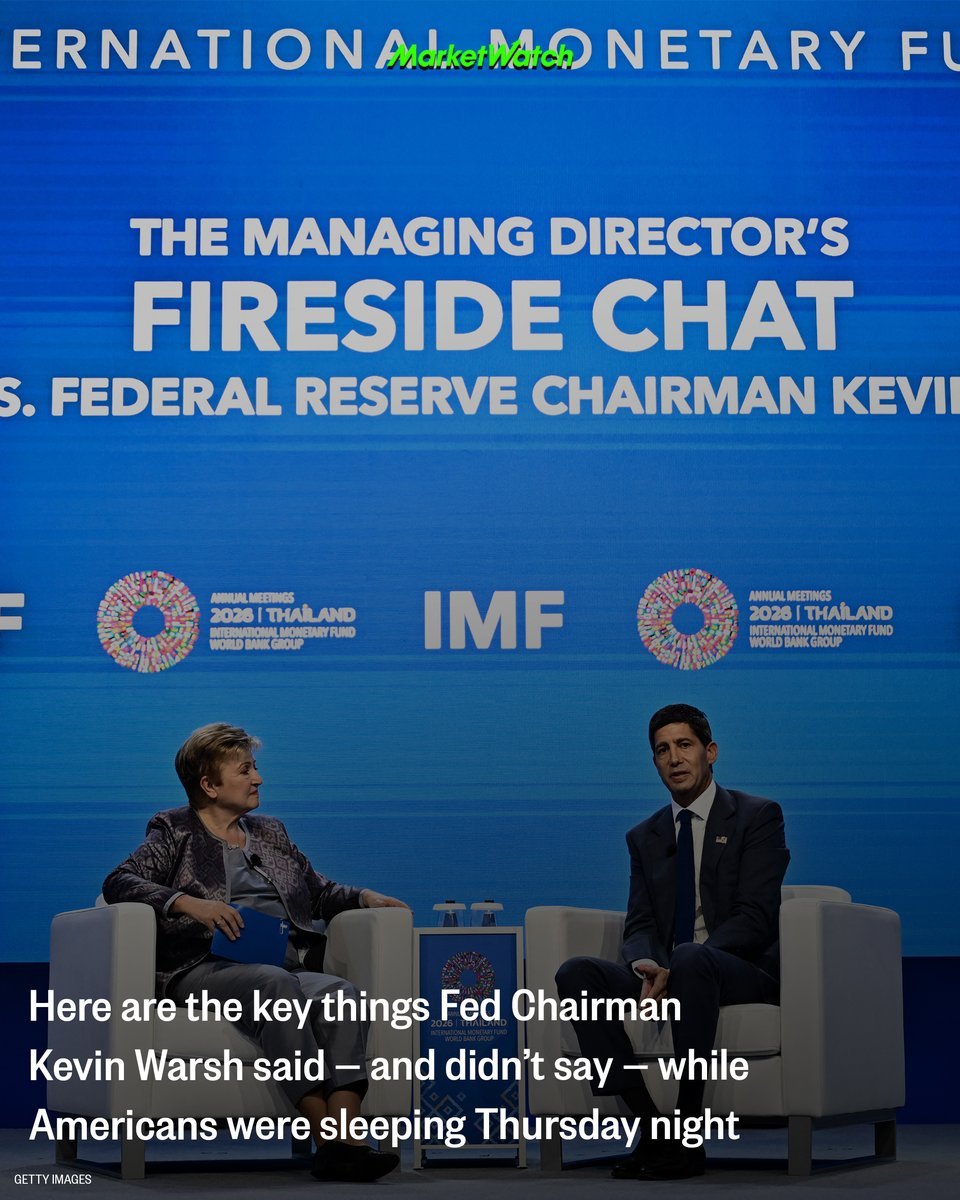
Speaking alongside International Monetary Fund Managing Director Kristalina Georgieva at the 2026 IMF-World Bank Annual Meetings in Bangkok, Kevin Warsh described artificial intelligence as "probably the most consequential change to the U.S. and the global economy in my lifetime." While Warsh expressed optimism that the technology will ultimately prove "very good" for wealth creation, he warned that the road ahead would be "very bumpy" as policymakers and businesses grapple with unfamiliar market structures and evolving technology.[1][2][3][5]
Warsh detailed the dual macroeconomic phases expected from AI expansion. In the near term, heavy capital investment is elevating economic demand and could potentially add to inflationary pressures before delivering a long-term positive supply shock through heightened productivity and efficiency. He also indicated that AI tools could reshape central banking by improving economic data analysis, though he cautioned that the short-term impact on employment remains uncertain and that "nobody knows who gets to make the money."[3][4][8][9]
Warsh simultaneously refrained from giving any forward guidance regarding the Federal Reserve's October 27–28 rate-setting meeting. He maintained a stance of keeping financial markets guessing, giving no assurance on whether further rate hikes are planned this year. Warsh defended September's interest rate increase as necessary to ensure price stability, stating that the central bank will evaluate incoming conditions across its October and December meetings before deciding future policy moves.[6][7][9]
Key facts
- Kevin Warsh described artificial intelligence as probably the most consequential change to the U.S. and global economies in his lifetime during an IMF fireside chat in Bangkok.
- Warsh stated that AI will ultimately be "very good" for wealth, though the transition will be "very bumpy" due to uncertain market structures and unclear short-term employment effects.
- AI investment is initially boosting demand and could add to inflationary pressures before generating a positive supply shock from increased productivity and efficiency.
- Warsh noted that advanced AI could transform central banking by assisting in economic indicator interpretation and monetary policy decisions.
- Warsh declined to hint at the Fed's October 27–28 rate decision, noting the central bank will assess conditions at both its October and December meetings.
Sources · 8 sources
- CN
CNBC@CNBCPost on X ·
Fed's Warsh says AI path will be 'very bumpy' but ultimately 'very good' for wealth https://t.co/uMoeW19O0A
Open source - CB
Coin Bureau@coinbureauPost on X ·
🚨NOW: FED Chair Kevin Warsh warns of a “VERY BUMPY” AI transition with major implications for the economy. “The advent of this new technology is probably the most consequential change to the U.S. and the global economy in my lifetime.” Warsh expressed optimism about AI’s potential while stressing the challenges ahead: “I want you to hear from me optimism, but optimism leavened by the seriousness of purpose.” “The path from where we are to there is likely to be a very bumpy one, bumpy in our understanding of the technology, bumpy because we really don’t know what the market structure is going to be of these new technologies.”
Open source - BT
Business Today@business_todayPost on X ·
Fed Chair Kevin Warsh Says AI Will Transform Monetary Policy, Global Economy | IMF 2026 U.S. Federal Reserve Chair Kevin Warsh says artificial intelligence will fundamentally transform how central banks conduct monetary policy, calling AI one of the most consequential economic developments of his lifetime. Speaking with IMF Managing Director Kristalina Georgieva during the IMF Annual Meetings in Bangkok, Warsh explained how AI could reshape inflation forecasting, economic data analysis, productivity and employment. Warsh believes AI investment is initially boosting economic demand, potentially adding to inflationary pressures, before delivering a positive supply shock through higher productivity and greater economic efficiency. He also highlighted how advanced AI tools could help central banks interpret economic indicators more accurately and make better-informed policy decisions. However, Warsh warned that the transition could be bumpy, with uncertainty surrounding jobs, market structures and the eventual beneficiaries of AI investment. Watch the conversation to understand why Warsh believes AI could revolutionise central banking and transform the global economy over the coming decade. #KevinWarsh #FederalReserve #ArtificialIntelligence #MonetaryPolicy #KristalinaGeorgieva #IMF2026
Open source - LD
Lark Davis@LarkDavisPost on X ·
Fed Chair Kevin Warsh on AI at the IMF Annual Meetings: he expects a big long-term productivity payoff, but says the path there will be “very bumpy” and nobody knows who gets to make the money. Source: IMF fireside chat with Kristalina Georgieva https://t.co/dJBAE1Ajz2
Open source - BT
Business Today@business_todayPost on X ·
U.S. Fed Chair Kevin Warsh & IMF Chief Kristalina Georgieva Discuss Global Economy At Bangkok Summit U.S. Federal Reserve Chairman Kevin Warsh joins International Monetary Fund (IMF) Managing Director Kristalina Georgieva for a high-profile fireside chat on the sidelines of the 2026 Annual Meetings of the International Monetary Fund and World Bank Group in Bangkok, Thailand. The conversation brings together two influential figures in global economic policymaking at a time when financial markets, central banks and governments are navigating an evolving economic landscape. Watch this special discussion for insights into the global economic outlook, monetary policy, inflation, interest rates, financial stability and the challenges facing advanced and emerging economies. The IMF and World Bank Annual Meetings provide a platform for policymakers, central bankers and financial leaders to exchange perspectives on economic growth, international cooperation and the future of global finance. Stay tuned to Business Today TV for comprehensive coverage of the 2026 IMF–World Bank Annual Meetings, global economic developments and major policy discussions. Watch LIVE: https://t.co/lir4GnbiMa | #BusinessToday #KevinWarsh #KristalinaGeorgieva #FederalReserve #IMF #WorldBank #Bangkok
Open source - MA
MarketWatch@MarketWatchPost on X ·
Federal Reserve Chair Kevin Warsh had an opportunity Thursday night to shape expectations heading into the central bank’s interest-rate-setting meeting in two weeks — and in keeping with his practice of leaving markets guessing, he chose not to. https://t.co/5plimjRtwi https://t.co/RzJ3GHQW4Q
Open source - CO
Cointelegraph@CointelegraphPost on X ·
🇺🇸 NOW: Fed Chair Kevin Warsh says AI’s path will be bumpy but ultimately good for wealth, speaking at the IMF-World Bank Annual Meetings in Bangkok. He also gives no hint for October rate decision. https://t.co/5odqOvIjIe
Open source - MI
Mint@livemintPost on X ·
Federal Reserve Chair Kevin Warsh called AI a major force in the global economy, saying it could raise inflation in the short term through investment while boosting productivity over time. https://t.co/q6wcwTz6iY
Open source - BT
Bull Theory@BullTheoryioPost on X ·
Kevin Warsh just spoke at the IMF-World Bank annual meetings in Bangkok. Here are the most important things he said: 1. He refused to signal whether the Fed will raise interest rates again at its October 27–28 meeting. 2. He said the Fed will assess the situation at its October and December meetings before deciding its next moves. 3. He defended September's rate hike as necessary to deliver price stability and reduce monetary accommodation. 4. Warsh gave no assurance that the Fed is done raising interest rates this year. 5. Described AI as potentially the most consequential change to the US and global economies. 6. He warned that AI's short-term impact on employment remains uncertain. 7. He said the transition to a more productive economy driven by AI could be bumpy. 8. Warsh highlighted how the AI boom is driving investment and creating price pressures. His remarks came after US inflation data came in higher than expected, keeping the possibility of another rate hike in focus.
Open source