

Hyperliquid generated $105 million in September revenue as non-core income doubled, Grayscale says
Hyperliquid generated approximately $105 million in revenue in September 2026 as non-core income doubled year-over-year to $38 million, according to an October 30 report by Grayscale.
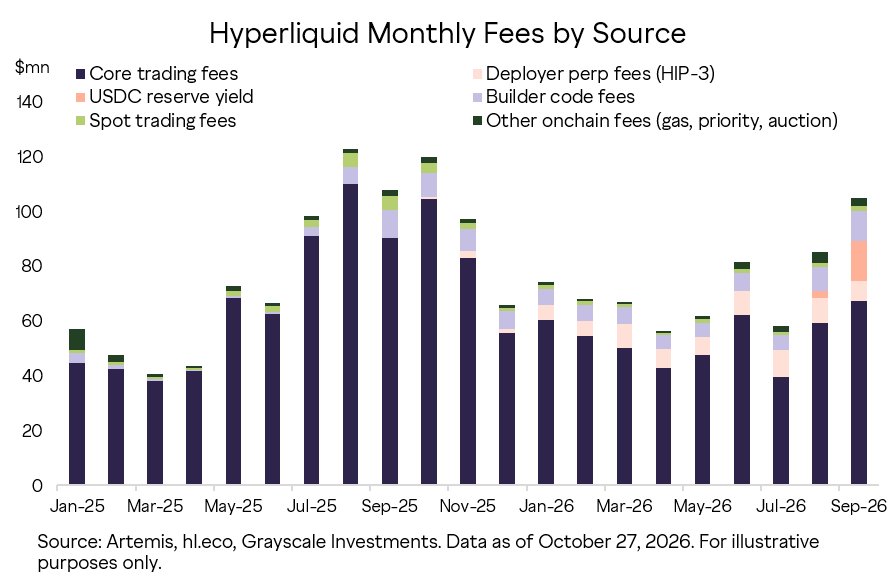
Decentralized trading platform Hyperliquid brought in roughly $105 million in revenue in September 2026, remaining roughly flat year-over-year, according to an October 30 research report by Grayscale Investments. While total monthly revenue was steady, the platform experienced a marked shift in its earnings mix as non-core, outsourced revenue streams doubled year-over-year to reach $38 million.[1][2][3]
Core trading fees accounted for roughly 64% of Hyperliquid's revenue in September 2026, down sharply from more than 90% in mid-2025. Grayscale attributed the rebalancing to increasing income from third-party markets, distribution partners, and USDC reserve yield. Data compiled by Artemis, hl.eco, and Grayscale shows that September 2026 fees included contributions from builder code fees, HIP-3 deployer perpetual fees, spot trading fees, and other on-chain costs including gas, priority, and auction fees.[1][3]
Looking ahead, Grayscale highlighted regulated U.S. market access as a key prospective growth driver for the network. The report cited plans by Kraken parent company Payward to launch as the first CFTC-regulated HIP-3 deployer, as well as an Intercontinental Exchange partnership with Trade[XYZ] aimed at establishing U.S.-regulated perpetual futures markets on Hyperliquid.[1]
Key facts
- Hyperliquid generated approximately $105 million in revenue in September 2026, roughly flat year-over-year, according to an October 30 report by Grayscale.
- Non-core, outsourced revenue streams doubled year-over-year to reach $38 million in September 2026.
- Core trading fees represented approximately 64% of Hyperliquid's September revenue, declining from over 90% in mid-2025.
- Hyperliquid fee categories tracked by Grayscale, Artemis, and hl.eco include core trading fees, USDC reserve yield, spot trading fees, builder code fees, HIP-3 deployer perp fees, and other on-chain fees.
- Grayscale cited Payward's plans to become the first CFTC-regulated HIP-3 deployer and an ICE partnership with Trade[XYZ] as potential growth catalysts in the U.S.
Sources · 3 sources
- WB
Wu Blockchain@WuBlockchainPost on X ·
Grayscale: Hyperliquid Generates $105M in September Revenue as Income Sources Diversify According to an October 30 report by Grayscale, Hyperliquid generated approximately $105 million in revenue in September 2026, roughly flat year-over-year. Core trading fees accounted for about 64% of revenue, down from over 90% in mid-2025, as income from third-party markets, distribution partners, and USDC reserve yield expanded. Non-core revenue doubled year-over-year to $38 million. Grayscale identified regulated U.S. market access as a potential growth driver, citing Kraken parent Payward’s plans to become the first CFTC-regulated HIP-3 deployer and ICE’s partnership with Trade[XYZ] to develop U.S.-regulated perpetual futures markets on Hyperliquid.
Open source - CB
Crypto BriefingArticle ·
Hyperliquid generates $38M in outsourced revenue last month: Grayscale Hyperliquid's strong revenue performance may boost market confidence, potentially impacting its price trajectory and investor sentiment. The post Hyperliquid generates $38M in outsourced revenue last month: Grayscale appeared first on Crypto Briefing .
Open source - CO
Cointelegraph@CointelegraphPost on X ·
🔥 BIG: Hyperliquid’s outsourced revenue streams generated $38 million last month, per Grayscale. https://t.co/clT5pfaNVI
Open source