

Federal Reserve proposes stablecoin rules under GENIUS Act with two-day redemption limit
The Federal Reserve released two regulatory proposals under the GENIUS Act establishing reserve, capital, and redemption standards for Board-supervised payment stablecoin issuers and creating an approval process for banks.
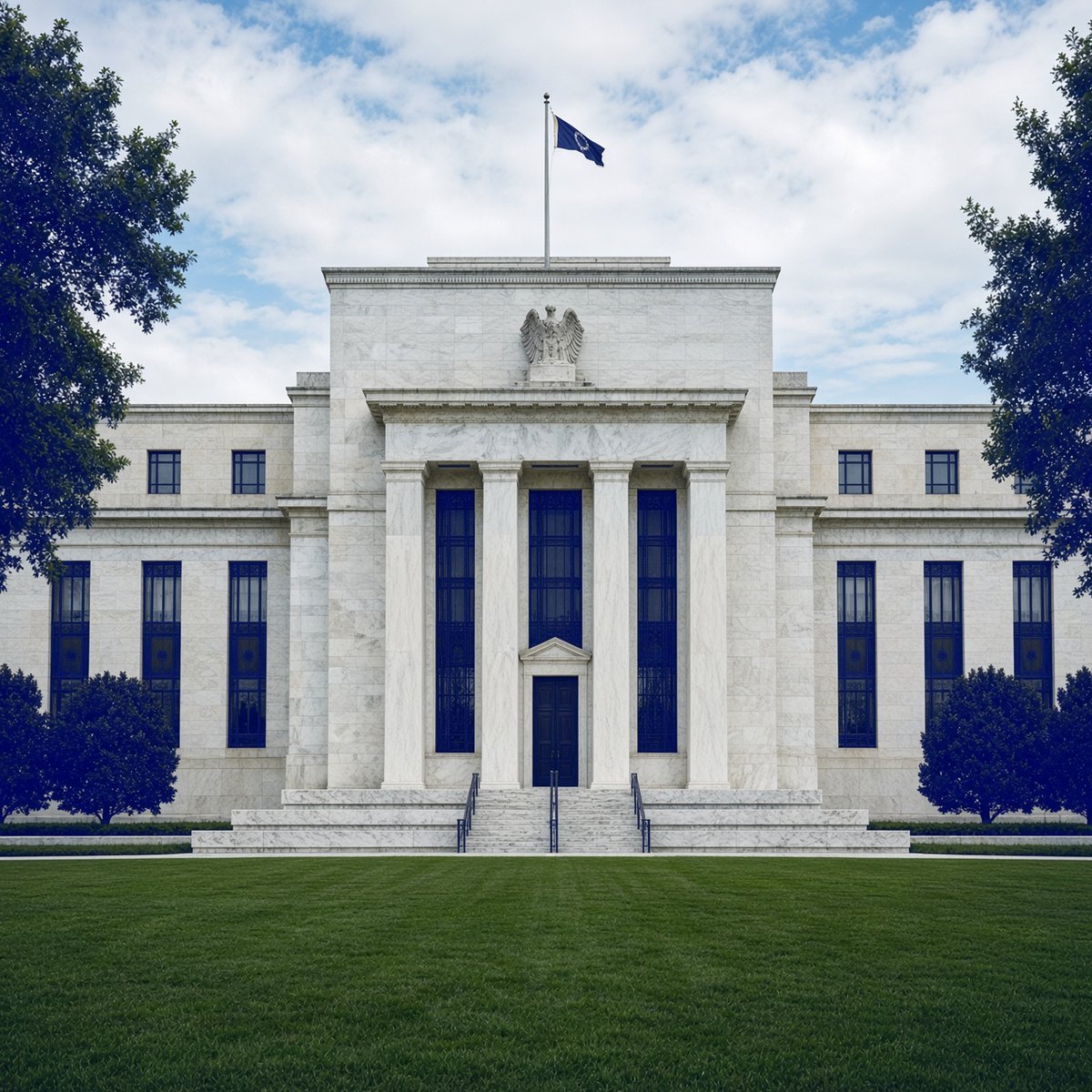
The Federal Reserve Board announced two proposals on Sept. 24, 2026, to implement a regulatory framework for payment stablecoin issuers under the GENIUS Act, formally publishing the measures in the Federal Register on Sept. 29. One proposal establishes reserve, capital, and risk management requirements for Board-supervised issuers, while the second creates an application process for insured state member banks seeking to issue stablecoins through subsidiaries.[2][4][5][7]
Under proposed section 247.12, supervised issuers must cap their ordinary redemption timeline at two business days after receiving a request, subject to onboarding checks and safe harbors. Issuers must back outstanding tokens fully at all times with qualifying assets such as cash, central bank balances, demand deposits, and Treasury bills maturing in 93 days or less, recording fair value daily at 5 p.m. in their supervising Reserve Bank's time zone. If reserves fall below par value, the issuer has 24 hours to notify the Fed and submit a recovery plan, facing mandatory reserve liquidation by 5 p.m. the following business day if the shortfall is not resolved.[1][2][4]
The framework also imposes marginal operational-risk capital charges starting at 2% on the first $20 billion in tokens, prohibits paying yield purely for holding stablecoins, and presumes certain third-party reward programs are off-limits. The proposed two-day redemption standard applies specifically to supervised issuers rather than exchange withdrawals, which remain subject to venue terms where researchers at the Andersen Institute identified at least $76 billion in dollar stablecoins in a July snapshot. The Fed's proposals remain open for public comment for 60 days following Federal Register publication.[1][2][3][4][6]
Key facts
- The Federal Reserve Board announced two GENIUS Act stablecoin proposals on Sept. 24, 2026, which were published in the Federal Register on Sept. 29.
- Proposed section 247.12 caps the ordinary redemption period for Board-supervised payment stablecoin issuers at two business days after a request.
- Covered issuers must fully back tokens with permissible reserves, such as cash and short-term Treasuries, recording fair value daily at 5 p.m. in their supervising Reserve Bank's time zone.
- If reserves drop below token par value, issuers must submit a restoration plan within 24 hours or begin liquidating reserves by 5 p.m. on the next business day.
- The proposed operational-risk capital charge scales from 2% on the first $20 billion in stablecoins to 1.5% on the next $30 billion and 1% above $50 billion, plus 25% of three-year average non-reserve revenue.
- The redemption rules do not govern customer withdrawal timelines from exchanges, where Andersen Institute researchers identified at least $76 billion in dollar stablecoins in a July 28 snapshot.
- Public comments on the proposals close 60 days after publication in the Federal Register.
Sources · 5 sources
- CR
CryptoSlateArticle ·
Fed proposed stablecoin rule could trigger a 48-hour liquidation run The Federal Reserve's proposed rules for the payment stablecoin issuers it supervises include a crisis clock measured in hours. An issuer whose reserves fall below the value of its outstanding tokens would have 24 hours to notify the Fed and submit a plan to restore full backing. Unless it closes the gap or the Fed directs it to proceed with that plan, the issuer must begin liquidating reserves and redeeming tokens by 5 p.m. on the next business day. The Fed says that window comes to less than 48 hours in many cases. The 392-page proposal also lets the issuer keep minting new tokens during that rescue window, and the Fed ties that choice to the public nature of blockchains. An abrupt halt in issuance would be visible on-chain and could tip holders off to the problem, speeding up the very run the rules exist to contain. Comments are open for 60 days once the proposal appears in the Federal Register. The clock starts at 5 p.m. The proposal requires reserve assets to equal or exceed outstanding tokens at all times. Issuers must formally record the fair value of those reserves at least once a day at 5 p.m. in the time zone of their supervising Federal Reserve Bank. The Fed says issuers operating close to the line may need to run that calculation several times a day. The breach clock starts at the beginning of liquidation, and finishing the process can take longer. Once liquidation begins, minting stops and redemption fees are prohibited. A separate rule for ordinary conditions requires honoring redemption requests within two business days, a timeline that runs independently of the breach clock. The Fed illustrates the logic with a $100 million stablecoin backed by $95 million in reserves. Split evenly, every holder could recover $0.95 per token. Once $35 million redeems at full par value, $60 million in assets remains against $65 million in tokens, leaving about $0.92 of backing for everyone who holds on. Extending the same arithmetic, $50 million in par redemptions would leave $0.90 per token, and $80 million would leave $0.75. A fixed reserve hole grows larger per remaining token with every holder who exits at $1, which rewards the fastest redeemers at the expense of everyone behind them. Forced liquidation is designed to push all holders toward the same pro-rata loss before that happens. Par redemptions before liquidation Reserves remaining Tokens remaining Backing per remaining token $0 $95M $100M $0.95 $10M $85M $90M $0.94 $35M $60M $65M $0.92 $50M $45M $50M $0.90 $80M $15M $20M $0.75 Minting stablecoins keeps the rhythm visible, at a cost Circle's figures show how much routine issuance activity a large stablecoin generates . As of Sept. 21, USDC had $74.6 billion in circulation against $74.8 billion in reserves. Over the prior 30 days, Circle issued $40.2 billion and redeemed $39 billion, a gross flow of $79.2 billion that exceeds the token's entire supply even though net circulation grew by only $1.2 billion. For a token with that kind of daily rhythm, a sudden stop in minting would stand out to anyone watching the chain. Each fully funded new token spreads the existing hole across a larger supply, leaving its dollar size at $5 million. In the Fed's example, $20 million of fresh issuance alongside the $35 million in redemptions would lift coverage to roughly $0.94, with the new buyers absorbing part of a loss that existed before they arrived. Closing the hole itself requires new capital, recovery of an impaired asset or a rebound in reserve values, and genuine distress can leave few buyers willing to mint. The proposal asks commenters directly whether issuance should be capped or prohibited the moment the 1:1 threshold is breached. Related Reading Circle says USDC operations unaffected by SVB, Signature closures The OCC chose the opposite trade-off The Office of the Comptroller of the Currency (OCC) proposed in March that an issuer under its supervision that falls below minimum reserves would have to stop net new issuance immediately, with a narrow exception for moving existing tokens across ledgers. Mandatory liquidation would kick in only if the shortfall persisted for 15 consecutive business days, a period the OCC could extend. The Fed's rules govern the issuers it supervises, while the OCC and state regulators oversee other issuers under the GENIUS Act , so the two approaches could run side by side. The Fed's December 2025 research on the March 2023 collapse of Silicon Valley Bank documents how these runs behave. Circle disclosed that $3.3 billion of USDC reserves , about 8% at the time, were trapped at the failed bank. After reserves fall below minimum Federal Reserve proposal OCC proposal New issuance May continue temporarily Net new issuance stops immediately Exception Issuance remains available during remediation window Tokens may be moved between ledgers if total outstanding issuance does not increase Initial response Notify Fed and submit remediation plan within 24 hours Restore reserve compliance; new net issuance remains prohibited meanwhile Liquidation trigger By 5 p.m. the following business day after the plan deadline unless reserves are restored or Fed directs issuer to proceed with plan After 15 consecutive business days below minimum reserves Can regulator alter path? Yes — Fed can direct issuer to proceed with remediation plan Yes — OCC can extend the 15-business-day period Core trade-off Avoid making a sudden minting halt an on-chain distress signal Stop an under-reserved issuer from expanding supply Redemptions surged, the primary redemption channel largely shut over the weekend with banking rails offline, and USDC fell as low as $0.86 on secondary markets. Trading volume on those markets hit nearly $2 billion in a single hour on March 11. The researchers concluded that shutting an issuer's redemption window leaves holders free to keep selling on exchanges, so the run moves venues and keeps going. In the Fed's view, visible redemptions can prompt more redemptions, while secondary-market trading can absorb selling that would otherwise hit the issuer as par redemptions and forced reserve sales. Where a stablecoin run would travel next CoinGecko's survey of the 12 largest centralized exchanges found that 97.7% of stablecoin-denominated trading pairs use USDT or USDC , and most spot volume on those venues trades against stablecoins. The total stablecoin market stands near $307.3 billion, with USDT at about $183.7 billion and USDC at $76.4 billion as of Sept. 25. Holders fleeing a distressed token could buy Bitcoin, lifting its price quoted in that stablecoin above its dollar price. They could also exit into fiat or another stablecoin, thinning order books and widening spreads across pairs. Price gaps between Bitcoin's different stablecoin pairs, order book depth, and funding rates would show which path a run was taking. The GENIUS Act steers reserves toward Treasuries maturing within 93 days and qualifying repo arrangements, and the Fed acknowledges that a large enough Treasury position could be hard to sell in full without moving prices. An IMF model from January lays out the timing mismatch between stablecoin holders, who can redeem around the clock, and bond and repo markets, which close overnight and on weekends. A large redemption wave can drain cash buffers and force bond sales as soon as those markets reopen. What holders do First market affected What to watch Potential next consequence Redeem directly for dollars Issuer reserves Redemption volume; reserve coverage Forced Treasury/repo liquidation Sell for another stablecoin Stablecoin exchanges/DEXs USDC/USDT or distressed-token spreads Liquidity concentrates in surviving stablecoins Buy Bitcoin or other crypto Crypto spot markets BTC price across different stablecoin pairs Apparent BTC premium in the weakening stablecoin Sell into fiat Exchange order books/banking rails Market depth and bid-ask spreads Crypto-native dollar liquidity contracts Keep selling while banking rails are closed Secondary crypto markets Stablecoin discount; weekend volume Run continues even when primary redemption slows Issuer sells reserves when markets reopen Treasuries/repo Short-term yields, reserve sales Crypto liquidity shock reaches traditional markets If an issuer closes its hole inside the first 24 hours, the episode could pass as a brief dislocation, with minting and redemption resuming their normal rhythm and the Fed's compressed clock working as designed. A breach that lands late on a Friday, with redemptions and a secondary-market discount feeding each other before the 5 p.m. cutoff, would play out very differently. Each exit at par would thin the backing for the holders who remain, and the scramble would spread into exchange order books. The issuer's Treasury holdings would wait for Monday's open while its tokens trade all weekend. The Fed has drafted a run rule for a market where everyone can watch the run in real time. Over the 60-day comment period, regulators will weigh that visibility against the speed they want from a rescue. The post Fed proposed stablecoin rule could trigger a 48-hour liquidation run appeared first on CryptoSlate .
Open source - CR
CryptoSlateArticle ·
Fed guarantees 2-day stablecoin payouts, but $76B remains blocked The Federal Reserve's stablecoin proposal would put a general two-business-day limit on redemption by issuers it supervises. For a customer holding stablecoins at an exchange, the first step is getting that venue to release or convert the balance. In a July 28 snapshot, researchers located $76 billion of stablecoins at centralized exchanges, where a customer may have to deal with the venue before reaching an issuer. Researchers at the Andersen Institute for Finance and Economics located that amount across 12 reserve-backed dollar stablecoins. They call the exchange figure a lower bound because some exchange wallets cannot be identified. Where the proposed clock starts The Fed proposal , published in the Federal Register on Sept. 29 after the Board announced it on Sept. 24, would require a Board-supervised payment stablecoin issuer to disclose its redemption procedure. Under proposed section 247.12, its normal period to redeem after a request could not exceed two business days. The issuer would have to explain how a customer can redeem and accept requests for at least one token, subject to screening and onboarding. The Board could extend the period for safety, financial stability or the public interest. The proposal also includes limited safe harbors for delays tied to required customer checks or circumstances outside an issuer's control. The requirements remain under public comment. If an exchange makes a qualifying redemption request to an issuer, that issuer's obligations could matter to the exchange. An exchange customer's instruction to sell, convert or withdraw a balance is a separate transaction with the venue. The venue's terms govern that customer-facing step. Current terms show why the distinction matters. Circle says direct USDC redemption under its terms for holders outside the European Economic Area is available to an eligible holder with a Circle Mint account in good standing. A holder without that account cannot redeem directly with Circle until eligible and registered, as the firm describes Mint as a service for institutional distributors. Coinbase's US agreement says a customer owns the balance of a USDC wallet, but Coinbase is not obliged to repurchase USDC for dollars. It may choose to do so, and the agreement points customers to Circle for direct redemption under Circle's separate terms. Coinbase also reserves the right to suspend sending or trading, while Circle Mint eligibility and the timing of a specific exchange withdrawal depend on the customer's circumstances and venue. Related Reading Proposed stablecoin rules might guarantee your dollar while making you wait a week to spend it The Andersen snapshot itself also has a scope problem for anyone trying to apply the Fed proposal to the full $76 billion. It includes $61.5 billion of USDT and $10.1 billion of USDC at exchanges, plus other coins, while the Fed text addresses Board-supervised issuers. Tether's current terms require a verified customer for direct redemption and post a $100,000 minimum . The venue total combines distinct issuer policies and regulatory categories, requiring issuer-by-issuer analysis before comparing it with the proposal's scope. Centralized exchanges held at least $76 billion of reserve-backed stablecoins, while issuer redemption followed separate eligibility rules. What one stablecoin run can show The Andersen researchers also traced venue balances during the March 2023 USDC stress episode. Using March 9 as the pre-shock baseline for that episode, they found that exchanges held 15.2% of USDC supply but accounted for 40% of the subsequent supply decline. The data compare token balances at identified exchange wallets with overall supply, while individual customer redemption routes lie outside these wallet-balance measurements. The exchange-held portion moved sharply in this one historical stress period. From March 10 to 13, USDC supply fell $2.7 billion while identified exchange balances rose $600 million. After March 13, supply fell another $8.1 billion and exchange balances fell $4.9 billion. In the first phase, tokens moving onto exchanges could coexist with a shrinking overall supply, while the larger exchange-balance decline came later. Treating the whole episode as an immediate exchange exodus would miss that reversal. That 2023 USDC episode offers limited guidance about how USDT or the other coins might behave under a future shock. Wallet-location data also leave the order of individual exchange requests unknown. The proposed rule would define redemption obligations for issuers within the Board's remit, with exceptions and eligibility checks. Andersen's July snapshot identifies the scale of balances held at exchanges. Today's venue balances and customer exit times require fresh, separate evidence. The post Fed guarantees 2-day stablecoin payouts, but $76B remains blocked appeared first on CryptoSlate .
Open source - CR
CryptoSlate@CryptoSlatePost on X ·
The Fed’s proposed two-business-day stablecoin redemption limit would apply to issuers it supervises. It would not set a deadline for customers withdrawing stablecoins from exchanges. Andersen Institute researchers identified at least $76 billion across 12 reserve-backed dollar stablecoins at exchanges on July 28. Those customer withdrawals follow venue terms; the proposed issuer deadline remains subject to onboarding checks and exceptions. https://t.co/p0cmsSdHsY
Open source - UN
UnchainedArticle ·
Fed’s Stablecoin Proposal Sets Capital Charges and Presumes Some Yield Deals Are Prohibited The Federal Reserve Board on Thursday proposed reserve, capital and risk management rules for the stablecoin issuers it supervises under the GENIUS Act , along with an application process for state member banks that want to issue stablecoins through a subsidiary. Comments on both proposals are due 60 days after they are published in the Federal Register. The rules would cover subsidiaries of insured state member banks approved to issue stablecoins, and uninsured state-chartered issuers with at least $10 billion in stablecoins outstanding that move under Fed oversight, according to a staff memo to the Board. Reserves and Capital Issuers would need reserves worth at least the par value of their outstanding tokens at all times. Eligible reserves include cash, Fed balances, demand deposits, Treasuries maturing in 93 days or less, certain overnight repo and reverse repo, funds invested only in those assets, and tokenized versions of some of them. Redemptions would have to be completed within two business days, unless a safe harbor applies. The operational risk capital charge would scale down as an issuer grows: 2% on its first $20 billion in stablecoins, 1.5% on the next $30 billion and 1% on anything above $50 billion. A second charge would equal 25% of an issuer’s three-year average revenue from activities outside its reserves. Reserves held as uninsured deposits or undercollateralized reverse repos would carry a separate 2% requirement. An issuer that misses its capital minimum at a quarter’s end would have to file a plan. If it is still short at the end of the next quarter, it would have to liquidate its reserves and redeem its stablecoins. Third-Party Yield Deals The GENIUS Act bars issuers from paying interest or yield solely for holding a stablecoin. Mirroring a proposal from the Office of the Comptroller of the Currency, the Fed would presume an issuer is paying prohibited yield if it pays an affiliate or a “related third party” that in turn pays holders of its stablecoins. That group includes firms paying yield as a service for the issuer and white-label partners. Issuers could rebut the presumption in writing. Stablecoin rewards were a central fight in the Clarity Act, where banks sought to curb them before the bill stalled in the Senate this month. Barr Flags Money Laundering Standard Governor Michael Barr backed the proposal. “I am encouraged by provisions for reserve asset limitations, as well as transparent and standardized capital requirements,” Barr said in a statement . Barr said he wants a final rule to address a provision that would let the Fed act on an issuer’s anti-money laundering lapse only if it is “significant or systemic.” Barr said he is concerned the standard “may have unknown effects on the Board’s ability to effectively substantiate that an institution establishes and maintains compliant programs.” The GENIUS Act takes effect on Jan. 18, 2027, or 120 days after regulators issue final rules, whichever comes first. Related Listen: The Chopping Block: Crypto Clarity Act Drama + Stablecoin Yield Wars + Developer Liability Fights The post Fed’s Stablecoin Proposal Sets Capital Charges and Presumes Some Yield Deals Are Prohibited appeared first on Unchained .
Open source - TB
The Block@TheBlockCoPost on X ·
THE BLOCK: The Federal Reserve Board is seeking public comment on two proposals tied to the implementation of the GENIUS Act: one covering reserve assets and capital requirements, and another establishing an application process for certain banks seeking to issue stablecoins. The proposals are part of the central bank’s effort to implement the stablecoin law passed last year.
Open source - CR
CryptoSlateArticle ·
Fed stablecoin proposal would make circulation a capital cost for supervised issuers A hypothetical payment stablecoin issuer within the Federal Reserve's proposed supervisory scope, with $1 billion in circulation and no revenue from activities outside its reserve assets, would start with a $20 million baseline operational-risk capital charge under the Fed's proposal announced Sept. 24. A separate loss-history adjustment and any other applicable capital charges would still have to be applied. The issuer would also need reserves backing its coins. The proposal gives the growth of a stablecoin a direct capital consequence: more coins outstanding mean a larger baseline operating-risk charge, even if the issuer earns nothing from custody or other activities. The formula would apply to approved stablecoin-issuing subsidiaries of insured state member banks and to certain qualifying state-chartered issuers that transition to Fed supervision. The Office of the Comptroller of the Currency's pending proposal takes a different route for issuers under its jurisdiction, using a capital amount tailored to each business and a separate pool of liquid assets tied to expenses. Related Reading Treasury’s first GENIUS rule tightens Washington’s grip on who can scale stablecoins How the Fed's proposed charge grows For the first $20 billion of payment stablecoins outstanding, the Fed would calculate the issuance portion of baseline operational-risk capital at 2%. The rate would fall to 1.5% on the next $30 billion and 1% on the amount above $50 billion. These are marginal bands: crossing a threshold would change the rate only on the additional issuance. The Board's memo also adds 25% of the issuer's three-year average annual revenue from non-reserve assets to the baseline. At $10 billion outstanding with no non-reserve revenue, the baseline issuance portion would be $200 million. This second hypothetical remains entirely in the first band. Both calculations are hypothetical. The Fed also proposes a loss scalar that can move the operational-risk charge up or down in response to realized losses. An individual issuer's operating-risk charge would also reflect the loss adjustment; its total capital requirement could include other components. Capital and stablecoin reserves serve different purposes. The Fed would require covered issuers to keep eligible reserve assets with a fair value at least equal to the par value of their outstanding coins. It separately proposes a 2% capital charge on reserve assets that are uninsured deposit claims or undercollateralized reverse repurchase agreements. Those possible credit-risk charges sit apart from the operational-risk calculation. One-to-one reserve assets are a separate requirement from the $20 million baseline capital figure. Related Reading Proposed stablecoin rules might guarantee your dollar while making you wait a week to spend it The Board memo limits the second category to state-qualified issuers that are uninsured state-chartered depository institutions with at least $10 billion in payment stablecoins outstanding and that transition under the GENIUS Act. The $10 billion threshold applies only to that transition category. That scope is narrower than the market for dollar stablecoins as a whole. Supervision depends on the legal issuer's status and regulator. The $1 billion example assumes an issuer that qualifies for Board supervision, with no company-specific inputs. The Fed announced the proposal on Sept. 24 alongside a separate proposal for how insured state member banks would apply to issue payment stablecoins through subsidiaries. The capital formula belongs to the proposed regulatory framework for Board-supervised issuers. Both proposals are open to revision through rulemaking. The OCC's different proposed method The OCC's March proposal would set an initial minimum capital amount for a newly chartered or licensed issuer based on its own business plan and risks, subject generally to a $5 million floor during a de novo period. It would also require ongoing capital commensurate with the issuer's business model and risk profile. The proposed rule text leaves that capital amount to a supervisory assessment. Related Reading Why newly granted federal approval won't save these 3 crypto banks The OCC would require a separate operational backstop: readily available liquid assets equal to 12 months of total expenses, identified apart from the assets backing stablecoins. The backstop would support operations during a disruption. It is a liquidity requirement measured by expenses. The Fed's operating-risk capital charge uses issuance and non-reserve revenue as its starting point. The OCC did discuss a variable capital component based on coins outstanding as an alternative and sought comment on it. Its proposed rule text omits that percentage-based charge. The two methods apply across different supervisory jurisdictions. Each regulator's eventual total requirement remains undetermined. The OCC proposal was published in the Federal Register on March 2, and its comment period closed May 1 . For the Fed proposals, the Board says comments will close 60 days after Federal Register publication; its Sept. 24 release gives no calendar deadline. The next consequential details are the final calibration of the Fed's loss adjustment and how each regulator settles its capital and liquidity rules after comments. The post Fed stablecoin proposal would make circulation a capital cost for supervised issuers appeared first on CryptoSlate .
Open source - TN
Tree News@TreeNewsFeedPost on X ·
FEDERAL RESERVE: Federal Reserve Board requests public comment on two proposals related to establishing a regulatory framework for Board-supervised payment stablecoin issuers under the GENIUS Act https://t.co/8QFQSz9qZc
Open source