

Chainalysis discloses breach after attacker using agentic techniques accessed customer data
Blockchain analytics firm Chainalysis disclosed that an external hacker used offensive agentic techniques to breach internal systems and access user records, including names, emails, and organization roles.
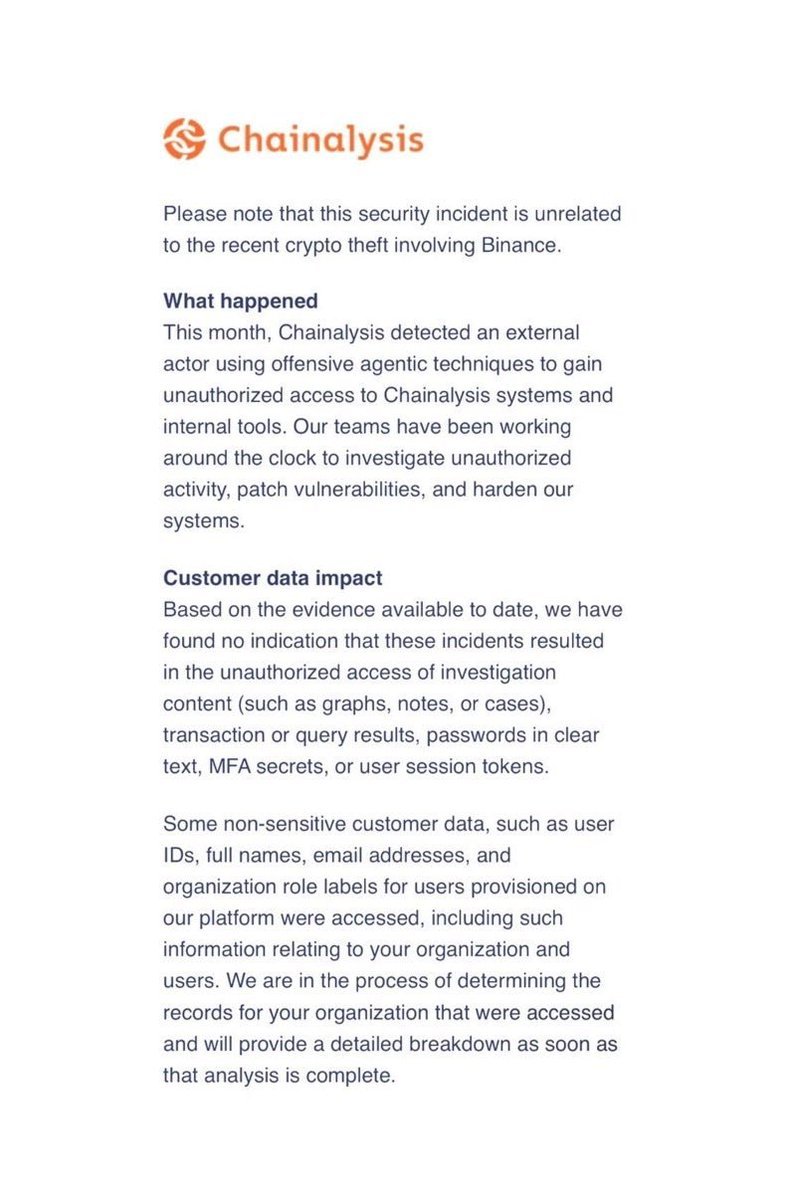
Blockchain intelligence firm Chainalysis confirmed that an unauthorized external attacker breached its systems and internal tools in October, accessing customer contact information and account details. According to a customer notification shared by the company in an Oct. 30 blog post, the intruder relied on offensive agentic techniques to gain access to non-sensitive user data.[5][7][6]
The exposed information includes user IDs, full names, email addresses, and organization role labels assigned to platform users. Chainalysis emphasized that it has uncovered no indication that core investigative material—such as graphs, notes, case files, or transaction and query results—was accessed. The company also found no evidence that clear-text passwords, multi-factor authentication secrets, or session tokens were compromised.[5][4][7][2]
Chainalysis has not disclosed the total number of impacted customers, the precise point of entry, or when the intrusion first began. It told clients that a per-organization accounting will be provided once its investigation concludes, adding that some clients were notified individually ahead of the broader alert. The company also stressed that the security breach is completely unrelated to the recent multibillion-dollar theft involving Binance.[5][3][1]
In response to the incident, Chainalysis brought in third-party security specialists and is deploying large language models to assist with a platform-wide review and system hardening alongside vulnerability patching. Users have been urged to turn on two-factor authentication and remain vigilant against unexpected password-reset or authentication prompts.[5][2][7]
Key facts
- Chainalysis detected an unauthorized external actor accessing its internal systems and tools in October.
- The intruder used offensive agentic techniques to access customer data, including user IDs, full names, email addresses, and organization role labels.
- Chainalysis found no evidence that investigative content such as graphs, notes, cases, query results, clear-text passwords, MFA secrets, or session tokens were accessed.
- Chainalysis stated the incident is unrelated to the recent crypto theft involving Binance.
- The company engaged third-party security specialists and is using large language models to assist with a platform-wide security review.
- Chainalysis has not disclosed how many users were affected or how the attacker initially gained entry.
Sources · 7 sources
- TB
The BlockArticle ·
Chainalysis says hacker using ‘offensive agentic techniques’ accessed its customers’ names and emails The firm has also been tracking Binance’s separate multibillion-dollar hack, and said the attackers are using a Tron protocol to dodge stablecoin freezes.
Open source - CR
CryptoSlateArticle ·
Chainalysis breach exposed customer names, emails and company roles The company urges vigilance for unexpected authentication prompts as it determines which customer records were accessed. Read the full story on CryptoSlate Understand the crypto stories that matter and what to watch next. Get The Catalyst in your inbox
Open source - CB
Crypto Banter@crypto_banterPost on X ·
🚨CHAINALYSIS REPORTEDLY HACKED, CUSTOMER NAMES AND EMAILS EXPOSED! @chainalysis, the firm that tracks crypto hacks, was itself breached, according to a customer email seen by @IntCyberDigest. The company told customers an attacker used “offensive agentic techniques” to access names, email addresses, and role labels. It said the incident has nothing to do with the $6.3B Binance heist.
Open source - LS
Laura Shin@laurashinPost on X ·
Chainalysis says it has found no evidence that investigation content, clear-text passwords or MFA secrets were accessed in its security incident, and that the breach is unrelated to the Binance theft. https://t.co/DBCPYTmKc7
Open source - UN
UnchainedArticle ·
Chainalysis Says Agentic Attack Reached User Records, With No Sign Yet of Case Files Blockchain analytics firm Chainalysis said it detected an attacker in its systems and internal tools in October, and that the intruder reached basic details about the people who use its platform. In a blog post on Oct. 30, the company published the email it had sent to affected customers. It said it detected “an external actor using offensive agentic techniques to gain unauthorized access to Chainalysis systems and internal tools.” The intruder reached what the company called “non-sensitive customer data,” including user IDs, full names, email addresses and the organization role labels assigned to platform users. So far, Chainalysis said, nothing points to the attacker reaching investigation work such as graphs, notes and cases, or transaction and query results. It said the same of clear-text passwords, MFA secrets and session tokens. The company has not said how many customers or users were affected, when the intrusion began or how the attacker got in. Chainalysis told customers a per-organization accounting of the exposed records will follow when its review wraps up. The email also said some customers had been notified before. Get Unchained’s crypto news in your inbox with the free Unchained Daily newsletter . What Chainalysis Is Doing Chainalysis said it has brought in third-party security specialists and is applying large language models to a platform-wide security review that goes further than patching the vulnerabilities that were exploited. It asked users to turn on two-factor authentication if their organization hasn’t, and to treat any unexpected password-reset or sign-in request with suspicion. The firm said the incident was “unrelated to the recent crypto theft involving Binance,” a reference to the drain of Binance’s hot wallets on Oct. 29. Blockchain data firm Allium disclosed a security incident on Oct. 28, after detecting it on Oct. 25. Why It Matters Chainalysis’s customers use its tools to trace funds and build cases, so the investigation files on its platform are among the most sensitive material it holds for them. The company says it has seen no sign so far that the attacker reached them. Chainalysis opened its email by citing “an industry-wide rise in AI-driven cyberattacks,” and its response leans on AI as well: it said it is using large language models to support its security review. By the company’s account, AI tools sit on both sides of this intrusion, with an attacker using agentic techniques and a defender answering with models. Related Listen: Ransomware Now Runs Without Humans. Is It Time to Hack Back? The post Chainalysis Says Agentic Attack Reached User Records, With No Sign Yet of Case Files appeared first on Unchained .
Open source - CH
ChainalysisArticle ·
Updated Nov 10: Chainalysis Security Incident Information Tuesday Nov 10, 2026 3:00 A.M. EST Update: Data Solutions is now back online. We’re bringing customers back as quickly… The post Updated Nov 10: Chainalysis Security Incident Information appeared first on Chainalysis .
Open source - WB
Wu Blockchain@WuBlockchainPost on X ·
Chainalysis Hit by Cyberattack, Accessing User Names, Emails, and Organization Roles Blockchain data analytics and tracking firm Chainalysis disclosed that an external hacker used "offensive agentic techniques" to gain unauthorized access to its internal systems and tools, leading to the compromise of some non-sensitive customer data, including user IDs, full names, email addresses, and organization role labels. Chainalysis emphasized in an email that the security incident is unrelated to the recent crypto theft involving Binance. The current investigation has found no indication that investigative content (such as graphs, notes, or cases), transaction or query results, plaintext passwords, MFA secrets, or user session tokens were accessed. The team is actively determining the specific affected records while patching vulnerabilities and hardening system security.
Open source