

Bitcoin slips back below $84,000 after brief inflation-fueled rally above $85,000
Bitcoin briefly cleared $85,000 following softer-than-expected U.S. PCE inflation data before reversing course and falling below $84,000 as government bond yields climbed.
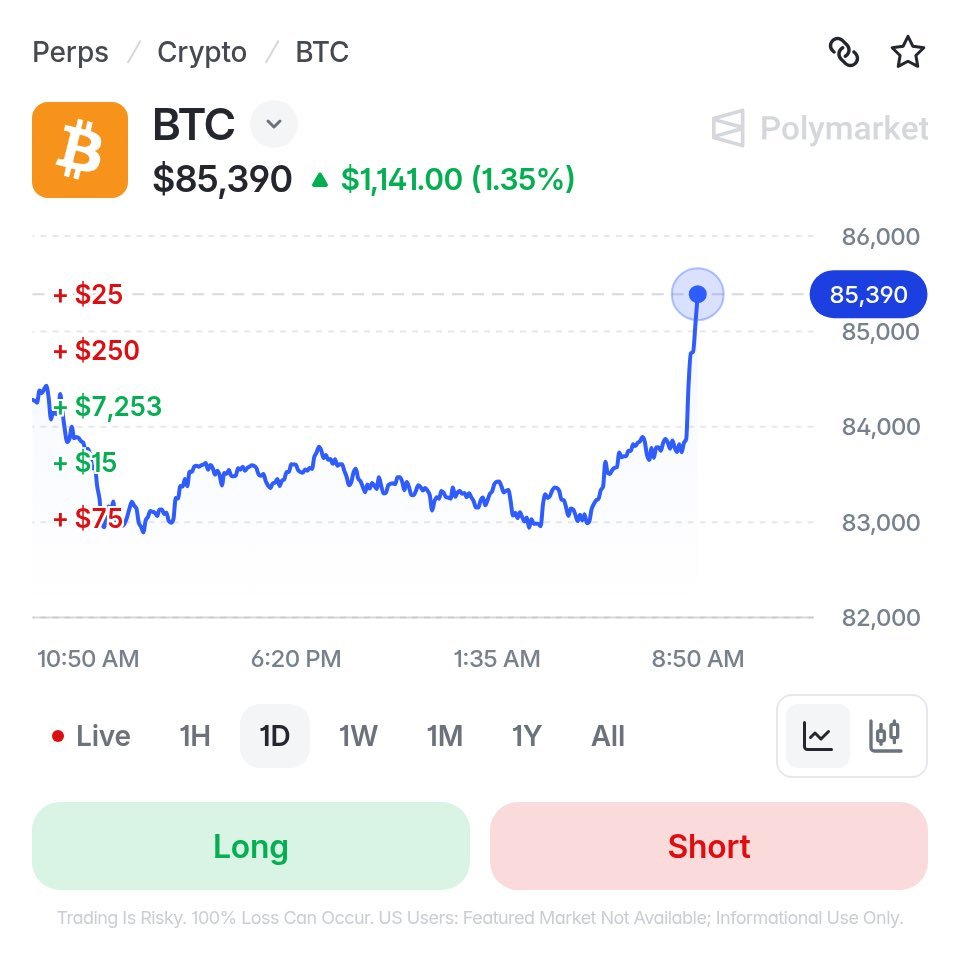
Bitcoin briefly surged above $85,000 on Sept. 30, 2026, after the U.S. Bureau of Economic Analysis released August Personal Consumption Expenditures (PCE) inflation figures. Headline PCE inflation rose 0.3% month over month and 3.4% year over year, while core PCE cooled to 0.2% monthly and 3.0% annually, both softer than expected. The cooler inflation prints initially boosted risk sentiment and reduced market expectations of future Federal Reserve interest rate hikes.[1][4][5][6][7]
The immediate move pushed Bitcoin up from below $84,000 past $85,000, triggering more than $75 million in short liquidations within an hour, according to Bull Theory. However, the breakout failed to hold. Bitcoin subsequently gave back its gains, dropping back below $84,000 later in the afternoon. By 3:28 p.m. UTC, Bitcoin traded near $84,000, representing a modest 0.56% gain over the previous 24 hours.[1][3][7][8][9]
The retreat coincided with broader market crosscurrents as government bond yields advanced. Decrypt reported yields reaching 20-year highs, with the U.S. 10-year Treasury yield trading around 5.276% and the UK 30-year yield near 5.939%. While a CryptoSlate headline attributed the crypto reversal to surging yields, the report noted that intraday snapshots did not isolate a definitive cause, particularly as equities and crude oil recovered while Bitcoin stumbled.[3][4][7]
Key facts
- Bitcoin briefly cleared $85,000 on Sept. 30, 2026, before slipping back below $84,000.
- August headline PCE inflation came in at 0.3% month over month and 3.4% year over year.
- August core PCE inflation rose 0.2% month over month versus 0.3% expected, and 3.0% year over year versus 3.3% expected.
- Odds of further Federal Reserve interest rate hikes declined following the release of the cooler PCE data.
- Over $75 million in short positions were liquidated within 60 minutes of the data release, according to Bull Theory.
- U.S. 10-year Treasury yields stood around 5.276% and UK 30-year yields reached near 5.939%, extending an ongoing rebound in government debt yields.
- At 3:28 p.m. UTC on Sept. 30, Bitcoin traded near $84,000, leaving it up 0.56% over a 24-hour window.
Sources · 9 sources
- C®
CryptoSavingExpert ®@CryptoSavingExpPost on X ·
Bitcoin just broke above $85K. BTC was trading below $84K before the Core PCE release and has now ripped through $84K and $85K after inflation came in softer than expected. Core PCE: 0.2% Expected: 0.3% The market clearly liked the data. Now the key is whether Bitcoin can hold above $85K. If it does, $87K is the next major level to watch.
Open source - CB
Crypto BriefingArticle ·
Bitcoin gains as rate hike expectations ease after soft PCE data Bitcoin's sensitivity to macroeconomic data highlights its evolving role in financial markets, with institutional demand showing structural resilience. The post Bitcoin gains as rate hike expectations ease after soft PCE data appeared first on Crypto Briefing .
Open source - CR
CryptoSlate@CryptoSlatePost on X ·
Bitcoin briefly cleared $85,000 after the PCE release, then slipped below $84,000. Stocks recovered while Bitcoin lost its gains. Elevated bond yields add context, but the snapshots do not establish what caused the reversal. https://t.co/CamGMKrFvc
Open source - DE
DecryptArticle ·
Bitcoin Jumps on Cool PCE Inflation Data as Bond Yields Hit 20-Year Highs The Fed's favorite inflation gauge came in cooler than expected, rate-hike odds fell and Bitcoin traders took the hint.
Open source - BL
BlockNews@blocknewsdotcomPost on X ·
🚨 LATEST: Bitcoin surges above $85,000 following cooler-than-expected U.S. PCE inflation data. The softer inflation print pushed Fed rate hike odds lower, giving risk assets an immediate boost. $BTC https://t.co/8OnqUVyo8I
Open source - CN
crypto.news@cryptodotnewsPost on X ·
JUST IN: Bitcoin jumps above $85,000 after softer U.S. inflation data August core PCE rose 3% year-over-year versus 3.3% expected, while markets cut October Fed rate-hike odds, giving $BTC and other risk assets an immediate boost. https://t.co/z1n9vm6GQJ
Open source - CR
CryptoSlateArticle ·
Bitcoin fails to sustain $85,000 breakout, and bond yield spikes are blamed Bitcoin erased a brief rally above $85,000 on Sept. 30, slipping back below $84,000 after fresh US inflation data as government bond yields rebounded and stocks recovered. The move followed the release of August personal consumption expenditures inflation at 12:30 p.m. UTC. At 3:28 p.m. UTC, Bitcoin traded close to $84,000, leaving the initial jump without a sustained breakout. Bitcoin was still up 0.56% over 24 hours at that reading. That rolling gain coexisted with the release-time rally's reversal, leaving a modest daily move after a sharp swing. The Bureau of Economic Analysis release put headline PCE inflation at 0.3% month over month and 3.4% year over year. Core PCE, which excludes food and energy, rose 0.2% month over month and 3.0% year over year. The figures gave markets a new inflation reading, but they arrived alongside an annual update to the national economic accounts. BEA said revisions to monthly personal income and outlays estimates began with January 2021, meaning comparisons with earlier releases require care. In the updated table, July's monthly headline and core inflation readings were both 0.1%, while August's headline and core readings were 0.3% and 0.2%, respectively. Comparing the new report with an older, unrevised July estimate would mix different versions of the data. Headline inflation also remained above the Federal Reserve's longer-run 2% target , which is measured using annual PCE inflation. The release added information to the policy debate but did not determine the Fed's next decision. Monthly changes capture the latest increase in consumer prices, while annual rates compare them with the same month a year earlier. Prices were still rising on both measures, despite the market's initial upward move in Bitcoin. Related Reading Bitcoin’s $85,000 test comes as Wall Street gets two different inflation stories Stocks recover as yields turn back up The SPDR S&P 500 ETF Trust traded around $766.82, while Brent spot crude rebounded toward $102.20 a barrel. Gold was quoted through a contract for difference at around $4,163.92 an ounce, below its earlier push above $4,200. The US Dollar Index stood near 101.39 after retreating from a higher level earlier in the session. The US ten-year yield was around 5.276%, while the UK 30-year government bond yield was near 5.939%, extending the rebound in yields across both government-bond markets. Rising yields correspond to falling bond prices, adding another dimension to the recovery in stocks and oil. The afternoon readings cover different intraday windows, so they do not isolate each instrument's response to the inflation release. They show stocks and oil recovering while Bitcoin struggled to retain its jump, with gold, the dollar, and bond yields following different paths. Today's PCE report measures August , while the subsequent manufacturing and employment readings cover September. Those different reference months leave further room for the inflation and growth picture to change. For Bitcoin, the immediate result was a failed attempt to stay above $85,000. A later price below $84,000 left traders watching whether a renewed recovery could persist beyond the first burst of buying. The post Bitcoin fails to sustain $85,000 breakout, and bond yield spikes are blamed appeared first on CryptoSlate .
Open source - BT
Bull Theory@BullTheoryioPost on X ·
BREAKING: Bitcoin surges above $85,000 and ETH has reclaimed $2700 after PCE inflation came at a 6 month low. Over $75 million shorts liquidated in the last 60 minutes. https://t.co/yRDESokpLk
Open source - BC
Bitcoin.com News@BitcoinNewsPost on X ·
Bitcoin Price Gives Up Gains After Short-Lived Pump to $85.5K https://t.co/ZZK4K21heN
Open source