

Bitcoin falls below $83,000 as oil climbs and Trump refuses to rule out Iran strikes
Bitcoin dropped below $83,000 alongside Nasdaq futures on Monday as Donald Trump declined to rule out further strikes on Iran, while rising oil prices and surging Treasury yields fueled risk aversion and triggered over $92 million in hourly liquidations.
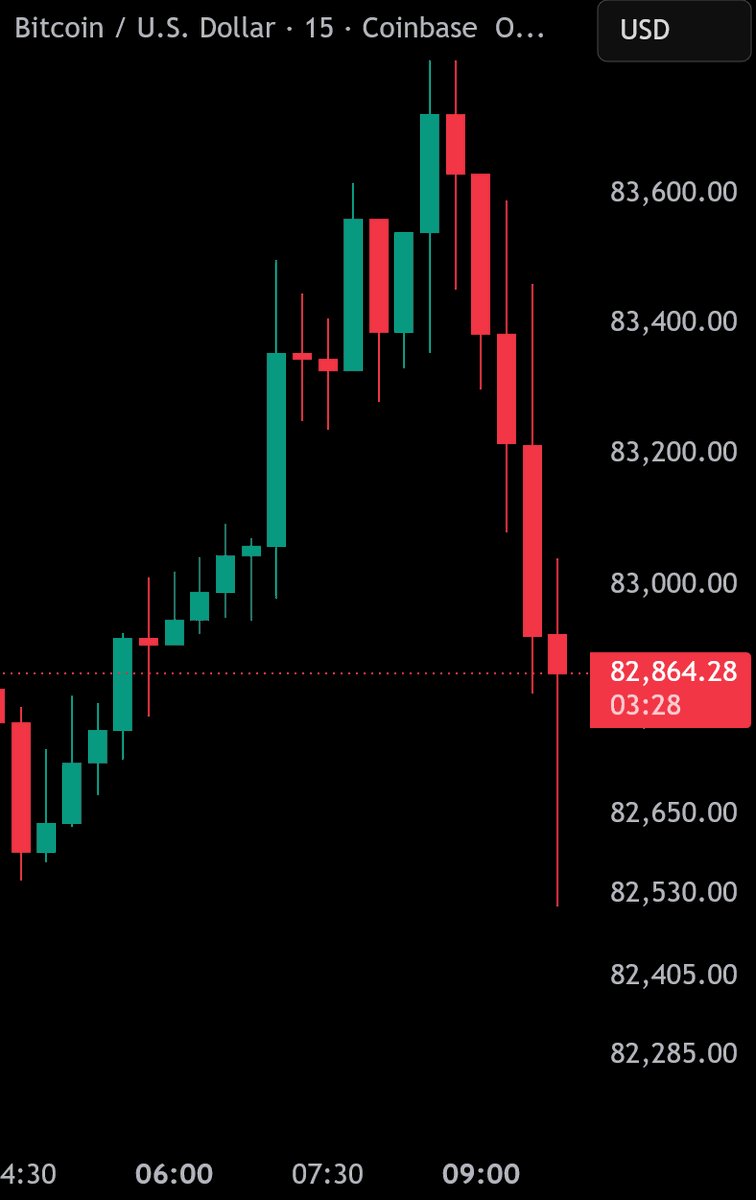
Bitcoin slipped below $83,000 during Monday's trading, touching an intraday low of $82,563 as risk assets retreated. The downturn followed remarks by Donald Trump on Sunday, where he stated he would not rule out additional military strikes on Iran ahead of the midterm elections, even while suggesting the war could conclude soon. Iranian officials separately pushed back against reports of peace progress, amplifying volatility across both traditional equities and digital asset markets.[1][3][4][5][6][7][11]
The geopolitical developments drove sharp moves across commodities and fixed income. Brent crude futures pushed back above $100 per barrel to reach $106, while the U.S. 10-year Treasury yield surged to a cycle high above 5.27% and the 30-year yield touched roughly 5.51%. In crypto derivatives, the rapid selloff triggered more than $92 million in liquidations within a single hour, according to Crypto Briefing, with over $90 million of those liquidations hitting long positions.[2][3][5][8][10]
Broader crypto markets softened alongside Bitcoin, with the CoinDesk 100 dropping 2.6% as altcoins reversed previous gains and futures open interest declined. The pullback took place despite U.S. spot Bitcoin ETFs taking in $134.5 million in net inflows on Friday, Sept. 25. Even with the early-week stumble, Bitcoin remained up more than 40% for the third quarter as investors prepared for upcoming U.S. inflation and employment releases.[1][5][8][9][10]
Key facts
- Bitcoin dropped below $83,000 on Sept. 28, reaching an intraday low of $82,563.
- Donald Trump stated on Sunday that he did not rule out more strikes on Iran before the midterm elections, though he suggested the war could end soon.
- Brent crude climbed back above $100 per barrel to $106 amid doubts over a U.S.-Iran truce.
- The 10-year U.S. Treasury yield rose above 5.27% to a new cycle high, while the 30-year yield rose to approximately 5.51%.
- The drop below $83,000 triggered over $92 million in liquidations within an hour, with more than $90 million originating from long positions.
- The CoinDesk 100 index fell 2.6% as altcoins reversed previous gains, accompanied by falling open interest across crypto futures.
- U.S. spot Bitcoin ETFs registered $134.5 million in net inflows on Friday, Sept. 25, ahead of the Monday market drop.
Sources · 7 sources
- CT
Coin TelegraphArticle ·
BTC price eyes best Q3 in nine years: Three things to know in Bitcoin this week Bitcoin fell below $83,000 to start the week amid US-Iran war developments but remains up more than 40% for Q3 ahead of key inflation and jobs data.
Open source - CB
Crypto Briefing@Crypto_BriefingPost on X ·
📉JUST IN: Bitcoin bitcoin:native drops below $83,000, triggering more than $92M in liquidations over the past hour, with over $90M of that coming from longs. https://t.co/nM8iGKkJHC
Open source - CO
CoindeskArticle ·
Live updates: Bitcoin remains under pressure as Iran denies report of peace progress The U.S. 10-year Treasury yield is sharply higher again, rising to a new cycle high above 5.27%.
Open source - CB
Crypto BriefingArticle ·
Bitcoin, NASDAQ futures fall as Trump hints at more Iran strikes Geopolitical tensions heighten market volatility, prompting risk aversion and impacting both traditional and digital asset investments. The post Bitcoin, NASDAQ futures fall as Trump hints at more Iran strikes appeared first on Crypto Briefing .
Open source - CR
CryptoSlateArticle ·
Bitcoin dips below $83,000 to start the week as Asia markets sell, extending last week’s retreat Bitcoin slipped below $83,000 during Monday's Asia session, moving beneath the lower edge of the $83,000 to $85,000 range reported late last week. BTC price sits around $82,953 at press time, down 1.79% over the preceding 24 hours. The intraday breach adds a fresh lower price to last week's retreat from the $87,000 level. CryptoSlate's Friday market analysis discussed Bitcoin's battle between roughly $83,000 and $85,000 after pulling back from near $87,000. A price around $83,400 would still have sat inside Friday's reported band. Early Monday trading took Bitcoin below its lower edge. Related Reading Bitcoin ETFs just erased a $5.7 billion hole, but profit-taking is swallowing the new demand Oil and yields rise alongside Bitcoin's slide The wider market began Monday under pressure from oil and bonds. In early Asia trading , Reuters reported Brent crude futures rising 1.6% to $106 a barrel and the yield on 30-year U.S. Treasuries edging up to about 5.51%. Asian shares made a cautious start. Reuters linked the oil rise to doubts over a U.S.-Iran truce, a development that renewed inflation concerns. Higher yields raise the return available on government debt, adding to the pressure that risk-sensitive markets were navigating. Those shifts coincided with Bitcoin's decline. Related Reading Why surging US real yields are quietly forcing Bitcoin under $84,000 U.S. spot Bitcoin ETF flows give a narrower view of demand. Farside Investors' live table showed $134.5 million in net inflows for Friday, Sept. 25, compared with $190.7 million on Thursday when checked Monday. Both readings were positive, even as the daily amount declined. Friday's fund data describe the final U.S. trading session before the weekend; the sub-83,000 USDT Binance quote came during a later Asian session. The figures show that ETF demand had not turned into a net outflow on Friday, while leaving Monday's order flow open. Related Reading US crypto ETFs draw over $3 billion this week, with nearly $800 million flowing beyond Bitcoin A recovery into Friday's reported range would make Monday's breach a short-lived dip. More trading below its lower edge would make the new price territory harder to dismiss. The post Bitcoin dips below $83,000 to start the week as Asia markets sell, extending last week’s retreat appeared first on CryptoSlate .
Open source - CO
CoindeskArticle ·
Bitcoin, Nasdaq futures decline as Trump won’t rule out more Iran strikes Trump on Sunday didn’t rule out additional strikes on Iran before the midterm elections, even as he said the war could end soon.
Open source - CT
Coin TelegraphArticle ·
Bitcoin drops under $83K as liquidity hunting keeps bulls from targeting yearly open Bitcoin joined US stock futures in dropping on Monday after US president Donald Trump did not commit to permanently halting strikes on Iran.
Open source - CO
CoindeskArticle ·
Bitcoin falls to $83,000 while altcoins unwind Friday's rally Bitcoin fell 1.7% to $83,000, though the CoinDesk 100 dropped 2.6% as Friday's biggest gainers reversed and oil climbed back above $100.
Open source - CR
CryptoSlate@CryptoSlatePost on X ·
Bitcoin fell below $83,000 in Monday’s Asia session after US spot Bitcoin ETFs took in a net $134.5M on Friday. Friday’s inflows show demand before the weekend. They don’t establish who was selling during Monday’s decline. https://t.co/x11ITJryeC
Open source - AI
Analytics Insight@analyticsinmePost on X ·
𝗕𝗶𝘁𝗰𝗼𝗶𝗻 𝗙𝗮𝗹𝗹𝘀 𝘁𝗼 𝗨𝗦𝗗 𝟴𝟯𝗞 𝗮𝘀 𝗢𝗶𝗹 𝗦𝘂𝗿𝗴𝗲 𝗗𝗿𝗶𝘃𝗲𝘀 𝗖𝗿𝘆𝗽𝘁𝗼 𝗦𝗲𝗹𝗹𝗼𝗳𝗳 Bitcoin price fell to USD 83,000 as oil climbed above USD 100 and traders reduced leverage across the crypto market. Futures positioning, falling open interest, and heavy altcoin losses show how rapidly market conditions shifted. #Bitcoin #BTC #Crypto #BitcoinFutures #Altcoins #CryptoMarket #AnalyticsInsight #AnalyticsInsightMagazine Read More 👇 https://t.co/tWhovvSeAZ
Open source - CR
CryptoSlateArticle ·
Bitcoin’s $85,000 test comes as Wall Street gets two different inflation stories Bitcoin hit an intraday low of $82,563 on Sept. 28, just below a concentration of long-term holders' purchase prices that Glassnode identified last week. Three US data releases now threaten to send different signals about the inflation and labor outlook that drives interest-rate expectations. On Sept. 30, the personal income and outlays report will measure August. The Oct. 1 ISM manufacturing survey covers September, followed by the Oct. 2 September employment report . A reassuring consumer inflation reading could arrive a day before a less comfortable snapshot of factory input costs. They measure different things, but traders may have to revise their view of the Fed as each lands. Glassnode's Sept. 23 analysis mapped a large cluster of long-term holder supply at $84,000 to $85,000. That area marks where many longer-term holders acquired coins, making Bitcoin's ability to reclaim it a measurable response to the week's news. Glassnode also identified a deeper True Market Mean reference near $77,000 and an overhead mean MVRV reference near $96,700. Glassnode's Sept. 21 Market Pulse showed net spot taker buying, rising volume and elevated futures leverage, alongside weekly ETF outflows. Fresh spot buying, stronger volume and ETF demand would lend a rebound more weight than futures covering alone. How a missing month could affect Bitcoin The Energy Information Administration estimated Brent spot crude averaged $91 a barrel in August, $7 above July, as Middle East exports remained constrained. The International Energy Agency found Gulf diesel and gasoil exports severely restricted in August and recorded a further jump in a physical crude benchmark by Sept. 9. The Sept. 30 PCE report cannot measure the later September evolution of fuel, freight and factory costs. The International Maritime Organization recorded vessel damage in and near Hormuz on Sept. 21 and 23, evidence that shipping risk persisted after the PCE reference month. JOLTS and PCE report on August conditions, while ISM and payrolls offer the first readings on September. If investors expect higher business costs to keep inflation elevated, Treasury yields and the expected Fed path could rise before a later consumer inflation report registers any pass-through. A soft August PCE print could ease that pressure initially without settling what happened next. Related Reading Bitcoin faces a new inflation test after diesel hits a nominal $6.53 record ISM's August report put the Prices Index at 71.1 and Supplier Deliveries at 59.3, consistent with slower deliveries. Diesel fuel and freight appeared on its list of commodities rising in price, while respondents separately discussed energy and the Hormuz conflict. A higher September Prices reading alongside slower deliveries or cost comments would signal fresh pressure on manufacturers. New orders and employment will help show whether demand is holding up as costs rise. The Sept. 29 August JOLTS release provides an early labor check, while the Oct. 2 September payrolls will more directly test the growth side of the policy question. The Fed raised its target range to 3.75% to 4% on Sept. 16, saying inflation remained elevated while job gains had kept pace with the workforce. Moderate job cooling could ease rate pressure, while a much sharper miss could instead raise worries about growth. The most revealing path this week would be soft August PCE followed by a higher September ISM Prices reading. An initial Bitcoin relief move could reverse if yields and rate expectations turn back up. Three other outcomes would test the same framework: Easing without a growth scare: Softer PCE, no further ISM cost acceleration and moderate job cooling could ease yields. A reclaim of Glassnode's $84,000 to $85,000 area would carry more weight if spot demand joins it. Persistent inflation: Firmer price signals with resilient hiring could keep rate pressure elevated. Failure to reclaim that holder cluster would bring Glassnode's lower $77,000 reference into view, without making it a fixed destination. Jobs break: A severe payrolls disappointment might lower yields but still hurt Bitcoin if investors respond to a growth shock by cutting risk. The test for Bitcoin is whether each new reading changes yields and Fed expectations, and whether spot buyers support the resulting move through Glassnode's dated holder-cost area. The post Bitcoin’s $85,000 test comes as Wall Street gets two different inflation stories appeared first on CryptoSlate .
Open source