

Binance hackers deploy unprecedented laundering patterns following $6.3 billion exploit
Attackers behind Binance's $6.3 billion breach are cycling stolen assets through thousands of automated wallet transactions and racing to convert freezeable stablecoins.
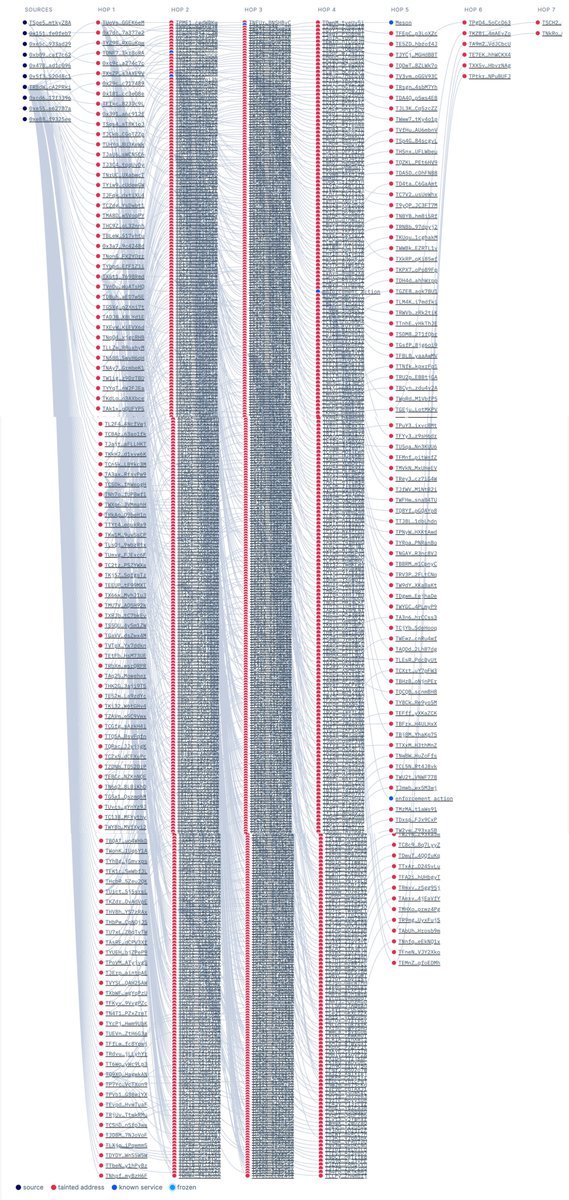
Hackers responsible for the $6.3 billion security breach at Binance are using never-before-seen laundering patterns to conceal their illicit gains, according to blockchain analytics firm Chainalysis. Investigators found that the perpetrators are rapidly routing funds through thousands of transactions across multiple wallets, frequently returning assets to addresses that were used earlier. The sheer volume and speed of these transfers indicate that the attackers are using automated tools to obscure their on-chain path.[1][2][3][4]
Initial findings from analytics firm Elliptic revealed that almost none of the stolen money had initially reached crypto mixers, bridges, or centralized exchanges. Instead, the attackers prioritized swapping freezeable stablecoins into alternative cryptocurrencies such as Ethereum and Tron before issuers could blacklist the addresses. Elliptic reported that approximately $786 million in stablecoins was converted prior to asset freezes, though the hackers were only partially successful in dodging restrictions.[2][3]
The operational security behind the heist extended beyond on-chain transfers. Binance's Richard Teng stated that the attackers employed a self-destruct mechanism during the breach to eliminate their digital tools and wipe traces of the intrusion. While the sophisticated cycling and conversion maneuvers severely complicate tracing and recovery efforts, analysts noted that they have not rendered the stolen funds invisible.[1][3]
Key facts
- Chainalysis reported that attackers behind the $6.3 billion Binance breach are using previously unseen laundering patterns involving thousands of rapid transactions.
- The attackers repeatedly circulated funds between wallets, including back to previously used addresses, suggesting automated laundering.
- Elliptic reported that roughly $786 million in freezeable stablecoins was swapped to Ethereum and Tron before blacklists and freezes took effect.
- Early findings from Elliptic showed almost none of the stolen assets had entered exchanges, bridges, or mixers.
- Binance's Richard Teng stated that the attackers used a self-destruct mechanism during the intrusion to destroy their tools and traces.
- Analysts noted that while the tactics complicate tracking and asset recovery, the funds remain traceable.
Sources · 4 sources
- CN
crypto.news@cryptodotnewsPost on X ·
LATEST: Chainalysis flags unprecedented laundering patterns in the $6.3B Binance hack The attackers are rapidly cycling stolen funds through thousands of wallet transactions, including previously used addresses, complicating tracking but not making the funds untraceable. https://t.co/FoF3com53E
Open source - CR
CryptoSlate@CryptoSlatePost on X ·
.@chainalysis identified thousands of rapid transactions after Binance’s $6.3 billion breach, suggesting automation. @elliptic says about $786 million in stolen stablecoins was converted to Ethereum and Tron before freezes. via @hardeyjumoh https://t.co/o9Ud8nOfLM
Open source - CB
Coin Bureau@coinbureauPost on X ·
🚨LATEST: Binance hackers are using NEVER SEEN BEFORE laundering patterns as stolen funds are being rapidly circulated through thousands of transactions, per Chainalysis. Instead of moving funds along a straightforward trail, the attackers repeatedly send them between wallets, including back to addresses used earlier. The speed and repeated patterns suggest automation designed to obscure the money trail. Binance’s Richard Teng says the attackers used a “self-destruct mechanism” to destroy tools and traces during the intrusion. Early findings from Elliptic showed almost NONE of the stolen funds had reached mixers, bridges or exchanges, making the unusual wallet movements particularly striking. They also rushed to swap freezeable stablecoins into assets such as ETH and move funds between addresses before blacklists could catch up. These efforts were only partly successful. The tactics complicate tracing and recovery, but they do not make the stolen funds invisible.
Open source - CR
CryptoSlateArticle ·
Binance hackers deploy never-seen-before laundering tactics to conceal $6.3 billion theft Hackers behind Binance's $6.3 billion breach are using previously unseen laundering tactics while rapidly converting stolen assets into other cryptocurrencies. On Oct. 30, blockchain analytics firm Chainalysis said that investigators identified thousands of transactions executed within short periods, suggesting the attackers used automation to obscure the movement of stolen funds. The discovery comes as Elliptic… Read the full story on CryptoSlate Understand the crypto stories that matter and what to watch next. Get The Catalyst in your inbox
Open source