

Zcash developers target January for quantum-resistant payments upgrade
Zcash developers are preparing post-quantum signature opcodes targeted for January to protect transparent addresses holding about 70% of the network's coins.
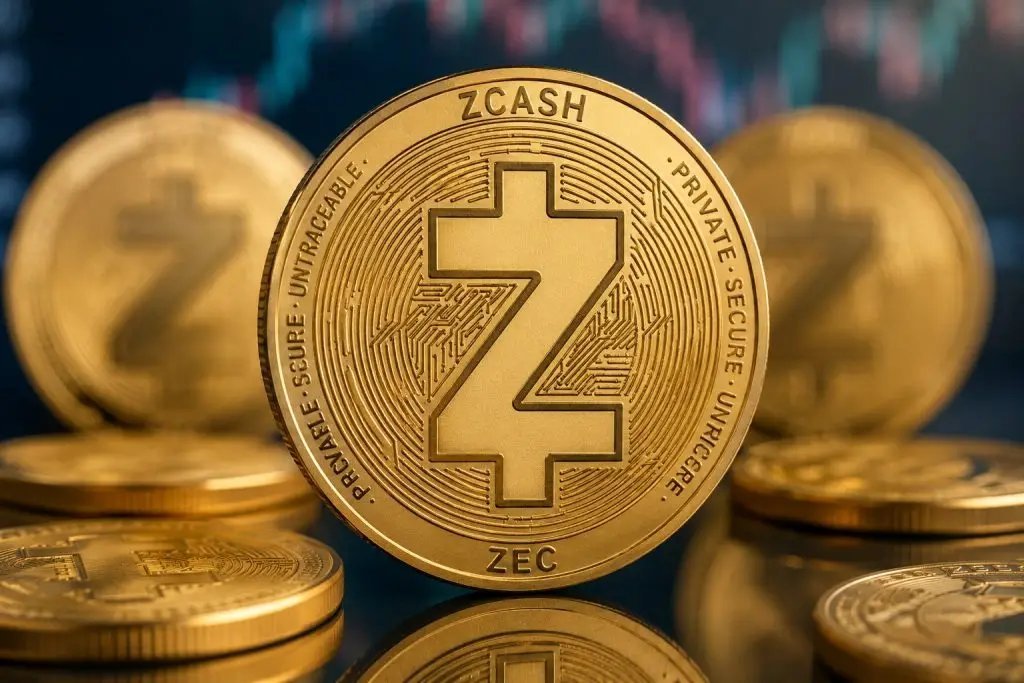
Developers behind the Zcash full-node project Zakura are preparing post-quantum signature opcodes targeted for January, aiming to safeguard transparent pools with hash-based signatures. According to an engineering post by Zakura's Roman Akhtariev, the upgrade focuses on public addresses, which currently hold roughly 70% of native Zcash tokens. While Coin Bureau noted the transition is targeted for January 2027, Akhtariev emphasized that no official Mainnet activation date has been established and the January timeline remains unconfirmed.[1][2][3][4][7]
Because spending from a transparent address exposes its public key to potential quantum attacks, developers are pairing the hash-based WOTS signature scheme with traditional elliptic-curve keys to enable rotating addresses where unspent funds shift to fresh destinations. To prevent RPC servers from linking rotating addresses to the same wallet owner during balance checks, Zakura proposed Private Information Retrieval (PIR). The tool allows local querying through compact filters—requiring around 15 KB of data per 10,000 scripts—and is being tested in the Vizor wallet under a private queries setting.[2][3][4][6]
The development comes after Ethereum Foundation researcher Justin Drake urged the crypto industry on Oct. 7 to prepare for bunker mode by moving funds to unused addresses, warning ECDSA cryptography could become vulnerable faster than anticipated. Shielded transactions on Zcash will require separate quantum upgrades, though news of the roadmap spurred an immediate surge in the price of ZEC.[2][3][4][5]
Key facts
- Zakura developers announced a target of January to bring post-quantum signature opcodes to Zcash's transparent address pools.
- The post-quantum upgrades initially focus on transparent addresses, which store approximately 70% of all circulating ZEC.
- No Mainnet activation date has been scheduled, and Coin Bureau reported the rollout is targeted for January 2027.
- Wallets can currently pair the WOTS hash-based scheme with elliptic-curve keys for rotating addresses, but an integrated wallet interface does not yet exist.
- Zakura designed a Private Information Retrieval system to keep servers from correlating rotating addresses belonging to the same user, with early testing integrated into the Vizor wallet.
- The upgrade follows warnings from researcher Justin Drake calling for bunker mode, while Zcash shielded transactions will require separate quantum protections.
- ZEC token prices surged following announcements of the January quantum-resistance timeline.
Sources · 7 sources
- SI
Solid Intel 📡@solidintel_xPost on X ·
INTEL: Zcash developers target January to add support for quantum-resistant payments, initially focusing on public addresses holding roughly 70% of zcash:native https://t.co/P4euRhCurX
Open source - UN
UnchainedArticle ·
Zcash Node Team Targets January for Post-Quantum Signatures on Transparent Addresses The team behind Zakura , a Zcash full node, said it plans to bring post-quantum signature opcodes to Zcash in January to protect funds held in transparent addresses. “Our team plans for post-quantum signature opcodes to land in Zcash in January,” Roman Akhtariev wrote in an engineering post. The post named no Mainnet activation date. The post said full post-quantum-safe transparent pools using hash-based signatures are targeted for January. In the meantime, it said, wallets can pair a hash-based signature scheme called WOTS with the usual elliptic-curve key to get post-quantum-safe rotating transparent addresses today, though no integrated wallet flow for that exists yet. Get Unchained’s crypto news in your inbox with the free Unchained Daily newsletter . Rotating Addresses, Private Lookups A transparent Zcash address holds a hash of a public key, and spending from it publishes that key, Zakura said. Funds left at an address after a spend can go to a new address whose public key is still undisclosed, Zakura said. The post said that adds protection if public keys can be attacked but the hashes stay secure. The catch is lookups. A wallet that checks many rotating addresses through an ordinary server request tells that server the addresses share one owner, even if the chain shows no link. Zakura’s answer is private information retrieval (PIR) , which lets a wallet fetch a record without the server learning which one. Confirmed transparent activity is split into block ranges, each served by a shard that publishes a compact filter the wallet checks locally. The wallet makes a private lookup only when a filter signals a possible match. Zakura said a range with 10,000 distinct payment scripts needs roughly 15 KB of filter data. The same method can rebuild a wallet’s history from a mnemonic, including addresses that now hold nothing, the post said. The post said the PIR component is coming to the Vizor wallet, and an experimental version can already be tested by turning on “Private queries” in settings. Context Ethereum Foundation researcher Justin Drake called on the industry on Oct. 7 to begin planning for “bunker mode,” an effort to shift funds into fresh addresses that have never signed a transaction. He said it is reasonable to brace for ECDSA breaking before quantum computers arrive, in the worst case “in months not years,” and urged holders not to rush or panic. Transparent Zcash transactions stay public on-chain, Zakura said. PIR protects the lookups wallets use to manage them. Related Listen: One Type of Post-Quantum Cryptography Is Most Popular. Why Is Crypto Trying Out Three? The post Zcash Node Team Targets January for Post-Quantum Signatures on Transparent Addresses appeared first on Unchained .
Open source - CO
CoindeskArticle ·
Zcash developers set January target for quantum-resistant payments after ‘bunker mode’ scare The plan concerns public payments, where about seven in 10 ZEC sit. A separate wallet tool would keep balance checks from revealing which addresses belong together.
Open source - CB
Coin Bureau@coinbureauPost on X ·
⚡️JUST IN: Zcash (ZEC) takes aim at crypto's looming quantum threat, targeting the introduction of quantum-resistant technology by January 2027. The upgrade would introduce hash-based digital signatures to protect wallets from future quantum attacks that could expose private keys and enable theft. zcash:native is targeting transparent transactions, where public keys are revealed when coins are spent. Developers are also testing technology that lets wallets check balances without exposing their addresses to servers. The January timeline remains unconfirmed, while shielded transactions will require separate protections.
Open source - CO
CoinGape@CoinGapeMediaPost on X ·
⚡️ ADA & BTC & ZEC • #Cardano Price Prediction as $ADA Funding Rate Hits 16-Week Low Despite CIP-0113 Mainnet Launch • #Bitcoin Price Outlook After Trump Eases Iran Fears: Will $82K $BTC Support Hold? • $ZEC Price Surges as #Zcash Developers Set January Target for Quantum-Resistant Payments
Open source - LS
Laura Shin@laurashinPost on X ·
Zakura's Roman Akhtariev wrote that hash-based WOTS signatures make post-quantum-safe rotating transparent Zcash addresses deployable today, though no integrated wallet flow exists yet. Full post-quantum protection for transparent pools is targeted for January. https://t.co/CqX0teJw3y
Open source - CO
CoinMarketCap@CoinMarketCapPost on X ·
LATEST: 🔒 Zcash developers are targeting January to add support for quantum-resistant, hash-based signatures. https://t.co/FEndf8AIkw
Open source