

Vitalik Buterin backs leanPCS to accelerate quantum-safe Ethereum signatures
Ethereum co-founder Vitalik Buterin revealed he has turned into a 'total bull' on leanPCS, backing the design as a fast track to handling bulky quantum-safe signatures under draft proposal EIP-8288.
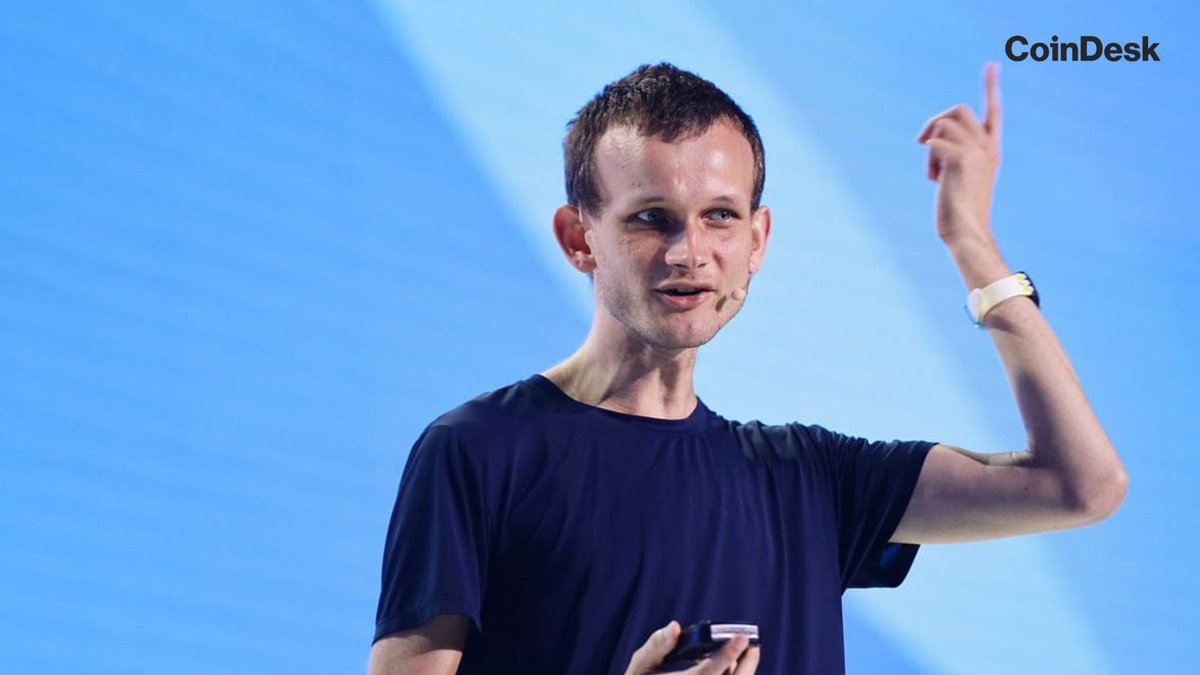
Ethereum co-founder Vitalik Buterin stated on social media that he now strongly favors leanPCS as the pathway for EIP-8288, a draft Ethereum Improvement Proposal aimed at stopping large post-quantum cryptographic signatures from overwhelming the blockchain. Unchained and Bankless reported that Buterin wrote on X, "Over the past few weeks I’ve gone from thinking leanPCS is total bull to being a total bull," asserting that proof aggregation could bring about a "cryptographic proof singularity" much faster than developers anticipated.[2][3][4][5]
Ethereum currently relies on 65-byte ECDSA signatures, but post-quantum hash-based alternatives range from 1 to 6 kilobytes, and zero-knowledge STARK proofs can reach 128 kilobytes. As detailed in EIP-8288, co-written by Buterin and Thomas Coratger in June, the proposal seeks to keep these massive payloads off-chain by moving signature and proof verification into the transaction mempool. Nodes would fold individual checks into recursive STARKs, leaving blocks to carry only a single aggregate proof alongside the verified transaction claims.[1][2][5][8]
Evaluating three design paths—leanSPHINCS, leanPCS, and leanSTARK—Buterin pointed to leanPCS, a polynomial commitment scheme, as the most practical near-term approach. According to Buterin, leanPCS requires only selecting a mathematical field and would allow Ethereum to verify a STARK proof for roughly 20,000 to 40,000 gas. While leanSPHINCS offers low signature costs, it restricts users to a single signature scheme. In contrast, leanSTARK could support arbitrary computations but depends on the network first establishing an instruction set architecture, a process Buterin noted will take significant time.[5][6][7]
EIP-8288 remains an early-stage draft, and its specification notes that eventual activation will require a coordinated Ethereum network upgrade.[3][5]
Key facts
- Vitalik Buterin announced on X that he went from thinking leanPCS was 'total bull' to being a 'total bull' on the approach for quantum-safe Ethereum signatures.
- leanPCS is being favored for draft proposal EIP-8288, which Buterin co-wrote with Thomas Coratger in June.
- Ethereum's current ECDSA signatures are 65 bytes, whereas quantum-safe hash-based signatures span 1 to 6 kilobytes and STARK proofs can reach 128 kilobytes.
- EIP-8288 proposes moving signature and proof verification into the mempool to fold them into recursive STARKs, leaving only an aggregate proof and verified statements on-chain.
- Under leanPCS, verifying a STARK proof would cost roughly 20,000 to 40,000 gas, requiring only the selection of a mathematical field.
- Activation of EIP-8288, which remains in draft status, requires a network upgrade.
Sources · 8 sources
- CO
Cointelegraph@CointelegraphPost on X ·
🔥 NEW: Vitalik turns bullish on leanPCS, seeing a faster path to scaling Ethereum's cryptographic proofs. https://t.co/stBQrzZtQx
Open source - CO
CoindeskArticle ·
Vitalik Buterin flips to ‘total bull’ on a faster route to quantum-safe Ethereum A proposed system would combine bulky digital signatures into a shared proof, helping protect wallets without making every payment much more expensive.
Open source - BA
BanklessArticle ·
Vitalik Turns "Total Bull" on leanPCS The Ethereum co-founder now backs a faster way to make post-quantum signatures cheap enough to use, through the still-draft EIP-8288.
Open source - DE
DecryptArticle ·
Vitalik Buterin Now ‘a Total Bull’ on leanPCS as Fast Track to Quantum-Safe Ethereum The Ethereum co-founder says proof aggregation could deliver a "cryptographic proof singularity" much sooner than developers expected.
Open source - UN
UnchainedArticle ·
Vitalik Buterin Says Ethereum’s Quantum-Safe Plan Can Ship Sooner With This Design Ethereum co-founder Vitalik Buterin said on Monday that he now favors a route called leanPCS for EIP-8288, a draft Ethereum Improvement Proposal (EIP) he co-wrote for keeping quantum-safe signatures, far larger than today’s, from swamping Ethereum’s blocks. “Over the past few weeks I’ve gone from thinking leanPCS is total bull to being a total bull,” Buterin wrote in a thread on X . leanPCS , for polynomial commitment scheme, only requires choosing a mathematical field, Buterin wrote, and it would let Ethereum verify a STARK (scalable transparent argument of knowledge), a kind of zero-knowledge proof, for roughly 20,000 to 40,000 gas . Get Unchained’s crypto news in your inbox with the free Unchained Daily newsletter . Why Size Matters Ethereum accounts today sign with ECDSA (the elliptic curve digital signature algorithm), at 65 bytes a signature. Quantum-safe hash-based signatures would take 1 to 6 kilobytes, and zero-knowledge proofs written as STARKs could grow to 128 kilobytes, Buterin wrote. “This is unsustainable to put on chain, and 8288 fixes this.” The proposal , written by Buterin and Thomas Coratger in June, moves verification into the mempool, where pending transactions wait. Nodes check users’ signatures and proofs there and fold them into recursive STARKs, so a block carries one aggregate proof. Only the statements those proofs vouch for, such as which public key signed which message, go on chain; the signatures and proofs do not. Three Options Buterin’s thread compares three things a user could submit. leanSPHINCS is a single hash-based signature type; he linked a June research post on SPHINCS-, a family of variants tuned for the Ethereum Virtual Machine (EVM) and built on SPHINCS+, a hash-based signature scheme that the National Institute of Standards and Technology (NIST) standardized in 2024 as SLH-DSA. With leanSPHINCS, users could hold quantum-safe accounts and pay only a little gas for each signature, “4096 for the 64 bytes,” he wrote, but “it’s only one specific signature scheme.” Even with no protocol change, the June post found, a smart contract can already check a SPHINCS+ variant aligned with a NIST draft of smaller parameter sets for its SLH-DSA standard for about 150,000 gas ; the variants it tested ranged from roughly 94,000 to 276,000 gas. leanSTARK would accept a proof of any computation, but only once Ethereum settles on an instruction set architecture (ISA), the language users write programs in. Buterin called that “a really big deal” and said it is “likely to take time to agree on the details of it.” leanSTARK could be added later, once the ISA is settled, he wrote. He called leanPCS a path to “the cryptographic proof singularity” that arrives “much faster than any of us expected.” Ethereum Layer 2 Starknet has weighed becoming a layer 1 to pursue quantum resistance by 2027, with StarkWare CEO Eli Ben-Sasson warning the quantum threat “may be MUCH closer than we think.” EIP-8288 remains a draft, and its text says activation requires a network upgrade. Related Listen: When Could Quantum Computers or AI Break Bitcoin? An Updated Threat Window The post Vitalik Buterin Says Ethereum’s Quantum-Safe Plan Can Ship Sooner With This Design appeared first on Unchained .
Open source - LS
Laura Shin@laurashinPost on X ·
Ethereum co-founder Vitalik Buterin weighed three options on Monday for EIP-8288, a quantum-safe draft he co-wrote, and backed leanPCS. https://t.co/PYMj3YNtDK
Open source - CB
Crypto BriefingArticle ·
Vitalik Buterin backs leanPCS as Ethereum’s path to quantum-safe signatures Buterin's support for leanPCS could significantly lower Ethereum's post-quantum transaction costs, enhancing security and scalability. The post Vitalik Buterin backs leanPCS as Ethereum’s path to quantum-safe signatures appeared first on Crypto Briefing .
Open source - CO
CoinDesk@CoinDeskPost on X ·
INSIGHT: @VitalikButerin backs new approach to quantum-resistant signatures for Ethereum, combining bulky proofs into a single compact verification before they hit the blockchain, potentially making quantum defense practical without increasing fees or block space usage. https://t.co/qeqOjuYlUT
Open source