

Supreme Court turns away Custodia Bank's challenge over Federal Reserve master account
The U.S. Supreme Court declined to hear Custodia Bank's appeal against the Federal Reserve, leaving in place a ruling that regional Fed banks have the discretion to deny digital asset institutions direct access to the central bank's payment rails.
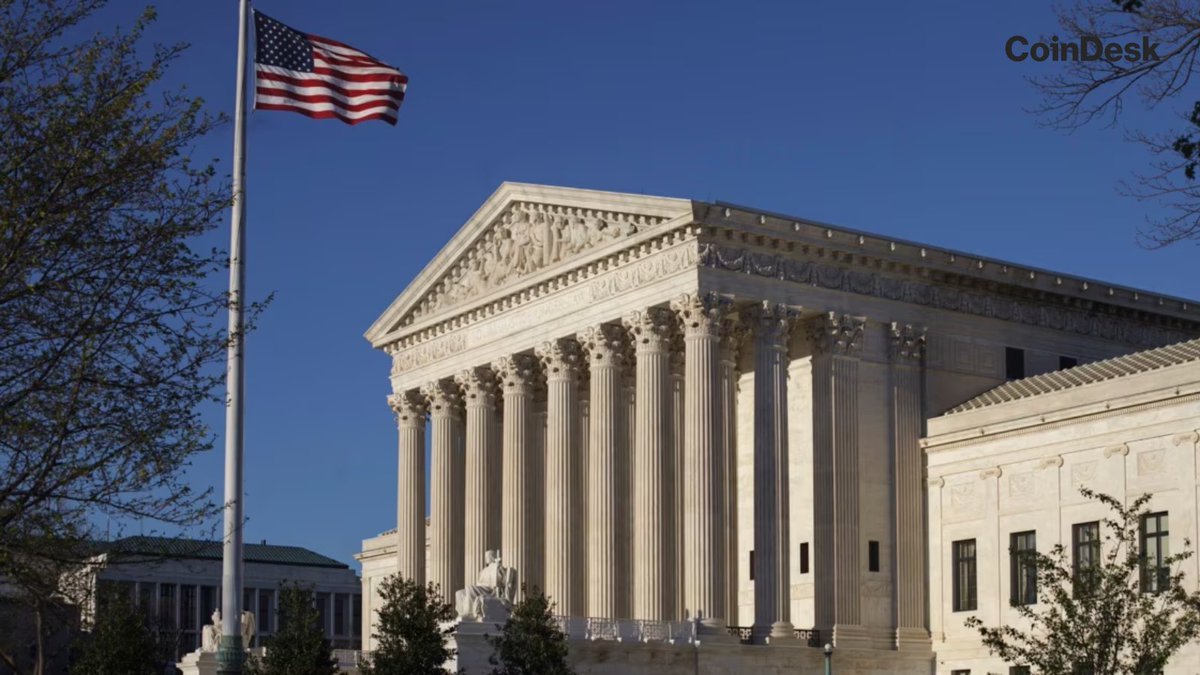
The U.S. Supreme Court has declined to hear an appeal by Wyoming-chartered Custodia Bank, bringing an end to the digital asset bank's multiyear legal effort to secure a Federal Reserve master account. The one-line entry in the high court's Nov. 16, 2026 order list for Custodia Bank, Inc. v. Fed. Reserve Bd., et al. (No. 26-62) was issued without written comment or noted dissent.[2][3][4][8]
By refusing to take up the petition, the justices left standing a decision by the U.S. Court of Appeals for the 10th Circuit holding that regional Federal Reserve banks hold the discretion to reject master account applications. Master accounts grant institutions direct access to the Fed's payment systems, allowing them to settle in central bank money without having to route transactions through correspondent intermediary banks.[2][4][5][6]
The decision concludes a dispute that began after Custodia initially applied for a master account with the Federal Reserve Bank of Kansas City in October 2020. The bank sued the Fed's Board of Governors and the Kansas City Fed in 2022, and the Kansas City Fed formally rejected the application in 2023. A Wyoming federal district court ruled against Custodia in 2024, a decision affirmed by a 10th Circuit panel in 2025 before the full appeals court declined a rehearing en banc in March 2026.[1][4][7]
Key facts
- The U.S. Supreme Court declined without comment or noted dissent to hear Custodia Bank's appeal in Custodia Bank, Inc. v. Fed. Reserve Bd., et al. (No. 26-62).
- The denial leaves standing a 10th Circuit ruling affirming that regional Federal Reserve banks have discretion to deny master account applications.
- Custodia Bank first applied for a Federal Reserve master account in October 2020, sued the Fed in 2022, and was denied by the Kansas City Fed in 2023.
- A Federal Reserve master account allows eligible financial institutions to access payment systems directly without relying on an intermediary correspondent bank.
- The 10th Circuit rejected an en banc rehearing on March 13, 2026, with three judges voting to grant it.
Sources · 8 sources
- TB
The Block@TheBlockCoPost on X ·
THE BLOCK: The U.S. Supreme Court has declined to hear a case brought by Custodia Bank against the Federal Reserve after the digital asset bank applied for a master account back in 2020. The Kansas City Federal Reserve denied Custodia's application in 2023, and the bank then sued in 2022.
Open source - ET
Eleanor Terrett@EleanorTerrettPost on X ·
🚨NEW: The U.S. Supreme Court has declined to hear @custodiabank’s challenge to the Fed’s denial of its application for a master account. The decision leaves standing a 10th Circuit ruling that regional Fed banks have discretion to deny access. A master account would let Custodia access the Fed’s payment system directly without relying on another bank.
Open source - CB
Crypto Briefing@Crypto_BriefingPost on X ·
🇺🇸 JUST IN: The US Supreme Court has declined to hear Custodia Bank's appeal, ending the Wyoming crypto bank's bid for a Fed master account. https://t.co/CmrCNf8Eao
Open source - UN
UnchainedArticle ·
Custodia Bank Loses Fed Master Account Fight as Supreme Court Won’t Take Case The U.S. Supreme Court on Monday declined to hear Custodia Bank’s lawsuit over the Federal Reserve’s refusal to give it a master account, listing the case among the petitions it denied in its Nov. 16 order list. The one-line entry for No. 26-62, Custodia Bank v. Federal Reserve Board , carried no written statement and no noted dissent. The denial leaves standing a ruling by the U.S. Court of Appeals for the 10th Circuit that the Federal Reserve Bank of Kansas City had discretion to turn down Custodia’s application for a master account , the account a bank holds directly with the Fed. It ends Custodia’s federal case more than six years after the bank applied for one in October 2020. TuongVy Le, a co-host of DEX in the City and general counsel at Veda, said in May that a master account “gives you access to basically the core plumbing of the US dollar system.” It “lets qualifying institutions settle directly in central bank money,” Le said on Unchained’s DEX in the City , instead of going through a correspondent bank, an intermediary bank that holds a Fed account and moves money on another firm’s behalf. Custodia CEO Caitlin Long has argued on Unchained that the Fed’s rejections of the bank were politically motivated . Get Unchained’s crypto news in your inbox with the free Unchained Daily newsletter . How the Case Got Here According to the 10th Circuit’s panel opinion , Custodia set out to bridge digital assets and the U.S. dollar payment system, operating under a Wyoming charter known as a special purpose depository institution, or SPDI. The bank sued the Fed’s Board of Governors and the Kansas City Fed in 2022, and U.S. District Judge Scott Skavdahl in Wyoming ruled against it in March 2024. The panel affirmed that ruling in October 2025. On March 13, 2026, the full appeals court denied rehearing after a poll of its judges failed, with Judges Hartz, Tymkovich and Eid voting to grant it. In a dissent joined by Eid, Judge Timothy Tymkovich wrote that “without a master account, a bank cannot operate in the modern banking system,” and that the ruling effectively handed the Reserve Banks “a veto over states’ chartering power.” Custodia, represented by Kannon Shanmugam of Davis Polk, petitioned the Supreme Court in July. The Fed’s Board, through Solicitor General D. John Sauer, and the Kansas City Fed filed opposition briefs in October. The Blockchain Association, The Digital Chamber and Sen. Cynthia Lummis filed friend-of-the-court (amicus) briefs supporting Custodia. The justices considered the petition at their Nov. 13 conference. Other Routes to the Fed Another firm has since found a narrower path. Kraken Financial received a limited-purpose Fed account earlier this year, which Le said in May on DEX in the City had been described as a “master account lite,” one without full access to every Fed service. The Supreme Court’s order does not rule on the merits. It leaves the 10th Circuit’s reading of the law as the final word in Custodia’s case. Related Listen: Why Fintechs May Finally Beat Banks at Their Own Game: DEX in the City The post Custodia Bank Loses Fed Master Account Fight as Supreme Court Won’t Take Case appeared first on Unchained .
Open source - CT
Coin TelegraphArticle ·
Custodia Bank loses Supreme Court bid for direct Fed payment access The Supreme Court refused to hear Custodia Bank’s appeal, meaning a lower court ruling allowing the Fed to reject account applications will stand.
Open source - CO
CoinDesk@CoinDeskPost on X ·
NEW: The U.S. Supreme Court declines to hear Custodia Bank’s appeal, ending the crypto bank’s bid for a Federal Reserve master account and preserving the Fed’s discretion to reject applications from digital asset banks. https://t.co/9TNrDpOffu
Open source - LS
Laura Shin@laurashinPost on X ·
Custodia Bank's court fight for a Federal Reserve master account ended Monday when the Supreme Court denied its petition. The Wyoming crypto bank first applied for the account in October 2020, more than six years ago. https://t.co/tOfl2oVa0J
Open source - QU
Quartz@qzPost on X ·
The Supreme Court just shut the door on crypto banks and the Fed: Custodia Bank's years-long push to plug into the Federal Reserve's payment system is officially over — the Supreme Court declined to hear the case without comment. The ruling… dlvr.it/TWM2z4 #SupremeCourt #Crypto https://t.co/V8nTzNQNcs
Open source