

SK Hynix commits 1.4 trillion won to support South Korean chip suppliers
SK Hynix has unveiled a five-year, 1.4 trillion won ($1.05 billion) program to strengthen domestic semiconductor suppliers, including an 874.6 billion won shared testing facility in Yongin.
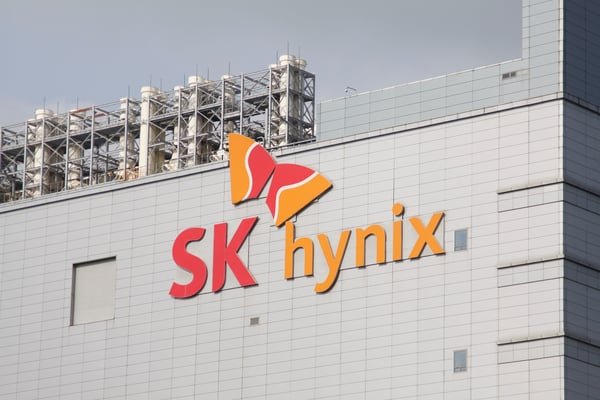
South Korea's SK Hynix announced that it will spend 1.4 trillion won, or about $1.05 billion, over the next five years to support domestic suppliers of semiconductor materials, parts, and equipment. The initiative is intended to strengthen the company's supply chain amid accelerating competition in the artificial intelligence chip market. Initial international coverage cited varying dollar equivalents for the investment, with Reuters and Quartz headlining a $1 billion figure, and The Straits Times citing $1.35 billion.[2][3][4][5][6]
A central piece of the program is Trinity Fab, an 874.6 billion won (around $654 million) open-access testing center built inside SK Hynix's first production fab in Yongin, south of Seoul. Developed in partnership with South Korea's central and local governments, the facility provides a 300mm wafer cleanroom where smaller equipment and material vendors can run final yield and performance checks under near mass-production conditions. Funding is divided among SK Hynix (443.2 billion won), the central government (373.6 billion won), and local governments (57.7 billion won). The cleanroom is scheduled to open in May 2027, with full testbed operations launching in October 2027.[1][3][6]
The broader support program spans four distinct stages: research and development, testing, mass production, and sales. To lower the barrier for smaller manufacturers, the program covers up to 50% of development expenses paid upfront during the research and development phase.[6]
Key facts
- SK Hynix plans to invest 1.4 trillion won (approximately $1.05 billion) over five years to support South Korean suppliers of semiconductor materials, parts, and equipment.
- Media headlines reported varying dollar figures for the five-year program, including $1 billion by Reuters and Quartz and $1.35 billion by The Straits Times.
- The plan includes Trinity Fab, an 874.6 billion won shared testing facility located at SK Hynix's Yongin production complex.
- Trinity Fab is co-financed by SK Hynix (443.2 billion won), the central government (373.6 billion won), and local governments (57.7 billion won).
- Trinity Fab's cleanroom is scheduled to open in May 2027, with full testbed operations starting in October 2027.
- The four-stage support initiative will cover up to 50% of supplier development costs upfront during the research and development phase.
Sources · 6 sources
- AI
Analytics Insight@analyticsinmePost on X ·
𝐒𝐊 𝐇𝐲𝐧𝐢𝐱’𝐬 𝐔𝐒𝐃 𝟏 𝐁𝐢𝐥𝐥𝐢𝐨𝐧 𝐌𝐨𝐯𝐞 𝐜𝐚𝐧 𝐂𝐡𝐚𝐧𝐠𝐞 𝐒𝐨𝐮𝐭𝐡 𝐊𝐨𝐫𝐞𝐚’𝐬 𝐏𝐨𝐬𝐢𝐭𝐢𝐨𝐧 𝐢𝐧 𝐭𝐡𝐞 𝐆𝐥𝐨𝐛𝐚𝐥 𝐀𝐈 𝐂𝐡𝐢𝐩 𝐑𝐚𝐜𝐞 SK Hynix plans to invest USD 1.05 billion to support South Korean chip suppliers. Its new testing center could help smaller companies turn research into real products and give South Korea a stronger position in the global AI chip race. #SKHynix #AIChips #SouthKorea #Semiconductors #ChipIndustry #ArtificialIntelligence #TechNews #analyticsinsight #analyticsinsightmagazine Read More 👇 https://t.co/ZpoGhOWl8a
Open source - RE
Reuters@ReutersPost on X ·
SK Hynix to spend $1 billion over five years to support chip suppliers https://t.co/3EF1oNTddj
Open source - QU
Quartz@qzPost on X ·
SK Hynix will spend $1 billion to build up its South Korean chip supplier base: The chipmaker plans an 874.6 billion won shared testing facility at its Yongin complex, scheduled to open in May 2027 dlvr.it/TWLtP2 https://t.co/ZfEl7v6NZY
Open source - TE
TechmemeArticle ·
SK Hynix says it plans to spend ~$1.05B over five years to support domestic suppliers of chip materials, parts, and equipment, strengthening its supply chain (Heekyong Yang/Reuters) Heekyong Yang / Reuters : SK Hynix says it plans to spend ~$1.05B over five years to support domestic suppliers of chip materials, parts, and equipment, strengthening its supply chain — South Korea's SK Hynix (000660.KS) said on Monday it plans to spend 1.4 trillion won ($1.05 billion) over the next five years …
Open source - TS
The Straits Times@straits_timesPost on X ·
SK Hynix to spend $1.35 billion over five years to support chip suppliers https://t.co/9isIth5sWp
Open source - AG
AGTP@AGTPinsightsPost on X ·
SK Hynix just announced a plan to spend about $1.05 billion supporting South Korea's chip suppliers. Here's what you need to know. SK Hynix said on Monday it will spend 1.4 trillion won, about $1.05 billion, over the next five years. The money goes to South Korean suppliers of semiconductor materials, parts and equipment. The goal is to strengthen its supply chain as AI chip competition intensifies. Part of the plan is a new chip testing facility called Trinity Fab. It sits inside SK Hynix's first production fab in Yongin, about 90 minutes' drive south of Seoul. It is billed as the world's first open-access chip testing facility for validating readiness for commercial mass production. Smaller suppliers can use it to test their materials, parts and equipment under near mass-production conditions. They can run final performance and yield checks there. The aim is to help smaller Korean equipment makers compete globally. Trinity Fab is a joint project with the central and local governments. The cleanroom opens in May 2027, and full-scale testbed operations begin in October 2027. It will provide a 300mm wafer environment. The wider support program covers four stages: R&D, testing, mass production and sales. At the R&D stage, up to 50% of development costs are paid upfront. Key numbers: - Supplier support: 1.4 trillion won (~$1.05B) over 5 years - Trinity Fab cost: 874.6 billion won (~$654M) - SK Hynix share: 443.2 billion won - Central government share: 373.6 billion won - Local governments share: 57.7 billion won - Cleanroom opening: May 2027 - Full testbed operations: October 2027 SK Hynix is also reportedly ordering more HBM4 back-end tools, but it has given no official capex figure for that.
Open source