

Optimizely vulnerability exploited to inject crypto-stealing malware across 178 websites
Attackers exploited a signup flaw in the Optimizely Web experimentation platform to inject malicious JavaScript across 178 organizations, attempting to hijack cryptocurrency transfers and skim payment card data.
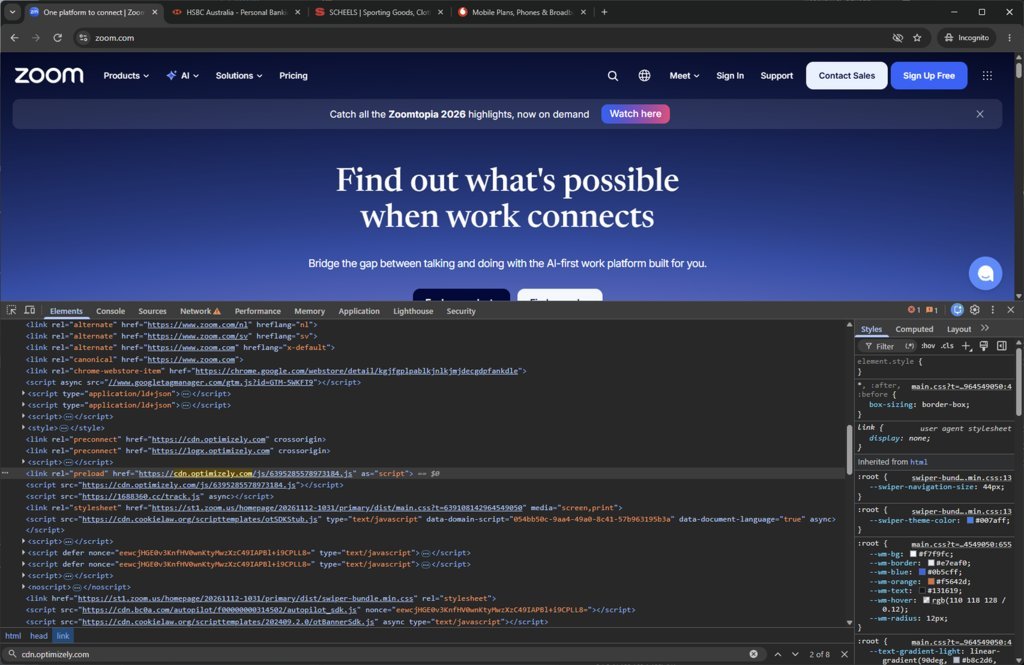
Cybercriminals compromised the Optimizely Web experimentation platform on November 16, 2026, serving malicious JavaScript to visitors across 178 organizations, according to web security researcher Scott Helme of Report URI. High-profile sites affected by the supply-chain breach included Zoom, CNN, BBC, HSBC, IKEA, Salesforce, Equifax, and cryptocurrency hardware wallet manufacturer Ledger.[2][6][3]
The injected code, dubbed OPTIMJACK by researchers, acted primarily as an address swapper that scanned web pages and clipboard contents to replace cryptocurrency wallet addresses with attacker-controlled destinations. Independent security analysis by Amirul Iman noted the script also sought to capture payment card details entered into checkout forms, exfiltrate cookies and screenshots, and deliver iOS exploit kits to target iPhone users.[2][5]
Optimizely told BleepingComputer that an unauthorized party exploited a bug in its account creation flow for its Experimentation product to alter customer projects. The company stated it blocked the vulnerable pathway, revoked access tokens, and removed the malicious files. Report URI reported that almost all infected scripts were cleaned by Monday evening.[2][5]
Despite the broad reach across major brands, blockchain records showed the attackers collected only about $7,000 to $7,150 across various tokens before emptying their wallets around midnight ET. Ledger confirmed its physical hardware devices and private keys remained secure throughout the incident, as the compromise was limited to its web layer.[1][2][4]
Key facts
- A security flaw in Optimizely Web allowed an attacker to inject malicious JavaScript into scripts loaded by 178 organizations on November 16, 2026.
- Affected organizations included Zoom, CNN, BBC, HSBC, Salesforce, IKEA, Equifax, and Ledger.
- The malicious package swapped pasted cryptocurrency wallet addresses, skimmed payment card forms, collected cookies and screenshots, and targeted iOS devices.
- Optimizely stated the intrusion occurred through a signup bug in its Experimentation product, and confirmed it blocked the path and purged the injected code.
- Report URI tracked approximately $7,150 in total cryptocurrency receipts sent to the attacker's wallets.
- Ledger confirmed the breach was restricted to its website layer and did not affect hardware devices or private keys.
Sources · 6 sources
- MA
ManLy@ManLyNFTPost on X ·
Someone hijacked one website testing script yesterday, and for most of the day it ran on 178 sites at once. Ledger’s site, BBC, CNN, IKEA, a few brokers. Real pages, real URLs. If you copied a crypto address there, the code quietly swapped the middle of it for the attacker’s. All that reach, and the attacker wallets have pulled in around $7K on-chain so far. Most visitors just weren’t sending crypto that day. The ones who were and noticed caught it on their hardware wallet screen, because the first and last characters still matched. Ledger’s devices weren’t touched, this was the website layer only. The attacker still walked away with less than a used car.
Open source - UN
UnchainedArticle ·
Hacker Rigs Optimizely Scripts to Reroute Crypto Payments; Optimizely Cites a Signup Bug An attacker rigged Optimizely’s page-testing scripts late Sunday into Monday, planting code that could replace crypto addresses with the attacker’s own on the websites of 178 organizations , among them Ledger , Zoom, HSBC and the BBC. Its crypto tool was an address swapper : it scanned each page and the visitor’s clipboard for crypto wallet addresses and put the attacker’s in their place, so a visitor who pasted one could send funds to the attacker. About nine hours in, the attacker added code that captured the number, expiry date and security code of any card typed into a checkout form the site hosted itself. Optimizely sells A/B testing: a site loads its script to try two versions of a page on different visitors and keep the one that performs better. Report URI, a web-security firm, published the findings at 5:47 p.m. ET Monday in a post by Scott Helme : of 1,611 Optimizely files it fetched, 188 carried the code. Get Unchained’s crypto news in your inbox with the free Unchained Daily newsletter . A Bug in Account Signups Optimizely told BleepingComputer the attacker got in through a bug in how new accounts are created for its Experimentation testing product. It said it has signed affected users out, revoked access tokens and reset their access. Its status page does not mention signup; it says an unauthorized party “exploited a vulnerability in Experimentation and used it to add malicious JavaScript to some customer projects,” and the incident was still listed as monitoring on Tuesday. Optimizely has not said how a flaw in signing up new accounts gave one attacker write access to projects at 178 unrelated organizations. Helme wrote that this was “for Optimizely to explain.” Ledger’s security team said in an X post that “the malicious code is no longer being served through our website.” The team added in the same post, “This incident does not affect the security architecture of Ledger devices.” Attacker Cashes Out, Then a Late Deposit Report URI found every infected file cleaned by 6:11 p.m. ET Monday. Report URI’s updated tally puts the attacker’s receipts at about $7,150 in bitcoin, litecoin, ether, USDT (Tether’s dollar-pegged stablecoin) and other tokens, and the attacker emptied the wallets around midnight ET. That total counts every receipt, not confirmed victim losses. Unchained’s check of the attacker’s Litecoin address found a new deposit of 1.7065 litecoin , about $76, at 5:18 a.m. ET Tuesday, about 11 hours after Report URI found every infected file clean. Who sent it is unknown. In October, SlowMist flagged similar address-swapping code in Udesk’s chat script . Related Listen: Why the Theft of $100 Million From Ledgers Took ‘Months of Research and Development’ The post Hacker Rigs Optimizely Scripts to Reroute Crypto Payments; Optimizely Cites a Signup Bug appeared first on Unchained .
Open source - BS
BSCN@BSCNewsPost on X ·
ALERT: 178 Major Organizations, Including Zoom, CNN And HSBC, Hit By Massive Cyberattack A cyberattack injected malicious JavaScript into websites using Optimizely Web. Zoom, BBC, CNN, HSBC, Ledger and IKEA were among 178 affected organizations. This allowed the malware to reach visitors through scripts the websites already trusted. The malware targeted crypto wallets, payment cards and iOS devices. It also stole cookies and screenshots. Report URI confirmed that the attack resulted in crypto theft. Report URI says most of the malicious code has now been removed. Source: Report URI
Open source - TB
The Block@TheBlockCoPost on X ·
THE BLOCK: Ledger's security team said it is aware of a security incident affecting Optimizely, a third-party service used on the Ledger website, and stated the issue has been fixed. The wallet maker said the incident does not affect the security of Ledger devices or users' private keys.
Open source - PR
ProtosArticle ·
OPTIMJACK malware targets crypto, card details on 186 major websites Some of the world’s most popular websites, including CNN, BBC, Fox News and Zoom, were yesterday reportedly serving visitors a malicious package dubbed “OPTIMJACK,” which aims to steal crypto and card details. By compromising popular website content management tool Optimizely, attackers have been able to inject malicious JavaScript into websites that use the tool, targeting their visitors. OPTIMJACK was flagged by security researcher Scott Helme, who claimed to have identified 186 affected “high value websites,” noting that “crypto users were the likely target based on the malware.” In addition to the aforementioned examples, the affected websites also included Ledger, HSBC, IKEA, Salesforce, Air France and GitLab. We are tracking a breach of a 3rd-party JS host impacting hundreds of high value websites. This is staggering. — Scott Helme (@Scott_Helme) November 16, 2026 Read more: US seizes $1.2 billion frozen after North Korean Binance hack Helme went on to trace around $7,000 in crypto collected by the scheme, but said that, by approximately 10pm UTC, only one “infected” file remained to be fixed. Galaxy Research’s Alex Thorn, however, suspects that only around $2,300 is victims’ money, with the remainder being the hacker’s own funds. Another independent security researcher, Amirul Iman, published a preliminary analysis on his blog, detailing the four elements of the malicious script. Pasted crypto addresses are replaced, card details skimmed, web cookies and screenshots are sent to the attackers. For iOS users, further material is injected, identified by Helme as the “Coruna and DarkSword exploit kits.” Iman estimates that up to 1.4 million devices may have been affected by the malware. Optimizely says it has “identified and contained a security incident affecting some Optimizely Web Experimentation customers” and has reassured users that “the vulnerable path is blocked, the injected code was removed, and customers have been contacted directly.” Got a tip? Send us an email securely via Protos Leaks . For more informed news and investigations, follow us on X , Bluesky , and Google News , or subscribe to our YouTube channel. The post OPTIMJACK malware targets crypto, card details on 186 major websites appeared first on Protos .
Open source - TE
TechmemeArticle ·
Researchers find Optimizely serving malicious JavaScript to sites of 178 organisations like Zoom, CNN, HSBC, Salesforce, GitLab, Ledger, BBC, Equifax, and IKEA (Scott Helme/Report URI Blog) Scott Helme / Report URI Blog : Researchers find Optimizely serving malicious JavaScript to sites of 178 organisations like Zoom, CNN, HSBC, Salesforce, GitLab, Ledger, BBC, Equifax, and IKEA — On 16 November 2026, malicious JavaScript was served to visitors of 178 organisations through the Optimizely Web experimentation platform.
Open source