

Brooklyn DA and FBI dismantle Eastern European crypto fraud network
The Brooklyn District Attorney's office and the FBI dismantled 241 fraudulent websites and seized 112 servers tied to an Eastern European crypto scam network that stole tens of millions of dollars from Russian-speaking Americans.
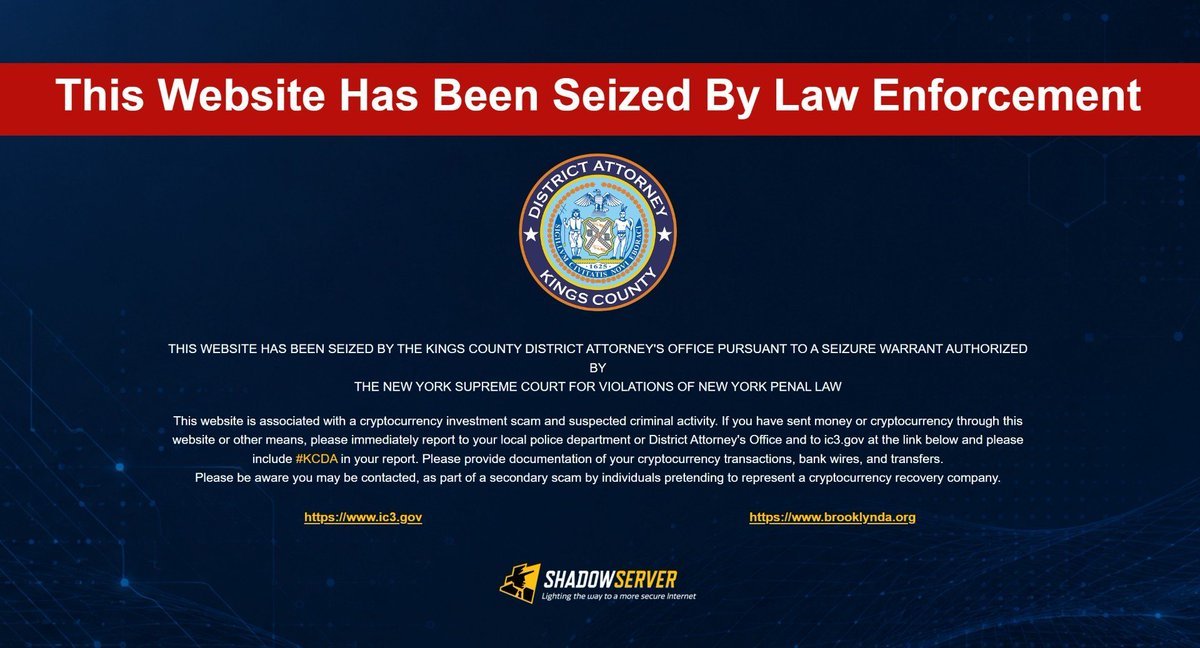
The Brooklyn District Attorney's office and the FBI have dismantled 241 fraudulent cryptocurrency domains and seized 112 servers tied to a multinational cybercrime network centered in Eastern Europe. Announced by Brooklyn District Attorney Eric Gonzalez, the joint enforcement action struck the backend infrastructure of a sprawling operation across Ukraine, Eastern Europe, and the United States that stole tens of millions of dollars from Russian-speaking Americans.[1][3][4][5][10][11]
The scammers lured victims through tailored Russian-language Facebook advertisements pointing to phony investment sites. Fake advisers then convinced individuals to deposit funds, displayed fabricated investment gains on their dashboards, and locked accounts or demanded extra fees when victims attempted to withdraw money. Investigators also uncovered that the syndicate ran a secondary scheme: weeks after stealing funds, the same perpetrators approached their victims pretending to be recovery agents offering false promises to reclaim the lost assets.[2][5][6][8][9][10]
Authorities have seized around $300,000 so far and are pursuing additional recoveries. However, the Brooklyn DA's office reported that many victims lost their life savings to the fraud.[5][7][10]
Key facts
- The Brooklyn District Attorney's office and the FBI dismantled 241 crypto fraud websites and seized 112 servers linked to Eastern Europe.
- The fraud network targeted Russian-speaking Americans and stole tens of millions of dollars.
- Victims were recruited through Facebook ads and directed to fake investment platforms showing fabricated balances.
- The same scammers returned weeks later running a secondary scam posing as recovery services to target former victims again.
- Authorities have seized approximately $300,000 so far against estimated victim losses in the tens of millions.
Sources · 10 sources
- QU
Quartz@qzPost on X ·
Brooklyn DA and FBI shut down 241 crypto fraud websites tied to Eastern Europe: The operation, which targeted Russian-speaking victims across the U.S., seized 112 servers and disrupted the network's entire back-end infrastructure dlvr.it/TVvykZ https://t.co/oi4rfTdExP
Open source - CR
CryptoSlateArticle ·
Crypto scammers stole millions from victims, then returned pretending to help recover their money Prosecutors say recovered data showed the same scammers returning weeks later with false promises to recover stolen assets. Read the full story on CryptoSlate Understand the crypto stories that matter and what to watch next. Get The Catalyst in your inbox
Open source - CB
Crypto Briefing@Crypto_BriefingPost on X ·
🚨 NEW: The Brooklyn DA shut down 241 websites and seized 112 servers tied to an Eastern Europe-linked crypto scam network that stole tens of millions of dollars from US residents, per Bloomberg. https://t.co/4rLEvSViso
Open source - BL
Bloomberg@businessPost on X ·
The Brooklyn District Attorney’s office has disrupted a multinational cryptocurrency-scam network centered in Eastern Europe, capping a years long effort to stop a fraud operation that has stolen tens of millions of dollars from Americans https://t.co/CCVgrsS60E
Open source - TB
The Block@TheBlockCoPost on X ·
THE BLOCK: Brooklyn District Attorney Eric Gonzalez said his virtual currency unit dismantled 241 scam domains and 112 servers in a crypto fraud that stole tens of millions from Russian-speaking victims. The investigation also uncovered a secondary scam that promised victims the recovery of their stolen cryptocurrency. Authorities have seized about $300,000 and are working to recover more.
Open source - QU
Quartz@qzPost on X ·
241 fraud websites seized in one of crypto's biggest takedowns The Brooklyn DA and FBI dismantled a sprawling Eastern European crypto scam network that lured victims through Facebook ads and stole tens of millions from Americans — many of th #CryptoFraud #BrooklynDA #CryptoScam https://t.co/bRIJ4HkK29
Open source - CR
CryptoSlate@CryptoSlatePost on X ·
Crypto scammers stole millions, then returned to the same victims weeks later with fake recovery offers, @BrooklynDA says. Only about $300,000 has been seized so far against estimated losses of tens of millions. via @hardeyjumoh https://t.co/obH7DHQTjT
Open source - DE
DecryptArticle ·
Brooklyn Prosecutors Take Down 112 Servers Behind Crypto Scam Targeting Russian Speakers The scammers also ran a fake recovery service, contacting victims weeks later with promises to get their stolen crypto back.
Open source - CO
CoindeskArticle ·
How Brooklyn prosecutors and the FBI took down a massive crypto fraud network targeting Russian speakers The scheme allegedly stole tens of millions through Russian-language Facebook ads and fake advisers, then went after victims again with fake recovery offers.
Open source - PR
ProtosArticle ·
FBI helps smash crypto scam targeting Russian speakers in Brooklyn The FBI has helped take down a crypto scam network that targeted Russian-speaking individuals living in the US and likely stole tens of millions of dollars. The operation, described as “one of the biggest operational cyber disruptions undertaken by a local prosecutor’s office,” was led by Brooklyn District Attorney Eric Gonzalez’s Virtual Currency Unit (VCU). Russian-speaking people living in Brooklyn were targeted by crypto scammers operating a phony forex investment site that promised substantial returns via Russian-tailored ads. The homepage of one of the main crypto scam sites. Read more: Elliptic chief: Tether and Telegram prop up $442B scam economy Individuals were contacted by fake investment advisors and convinced into depositing funds on their supposed investment site. Victims were shown fake gains, and when they tried to withdraw their funds, they were told their account was locked or that they had to pay more money to access it. Crypto scammers hit victims with more recovery scams Authorities dismantled 241 crypto scam domains and 112 servers across Ukraine, Eastern Europe, and America. The group would also revisit individuals it had already scammed, luring them with recovery operations that promised to restore their stolen crypto. Gonzalez’s local office was able to seize $300,000, but despite this, many Individuals lost their life savings. FBI director’s Russia optics aren’t great right now FBI Director Kash Patel is also making headlines in relation to Russia. MS NOW reported that Patel had landed in Russia on Wednesday for a two-day meeting with the country’s Federal Security Service (FSB). However, US authorities clarified that he was in fact attending a law enforcement event in Virginia on that day. Patel then posted on X, “From Russia, with love…” after the event. Russia is currently providing real-time satellite data on the location of U.S. troops and bases in the Middle East to Iran, and the FBI Director is tweeting this and thinks it’s hilarious. https://t.co/BqX2rtumH1 — Andrew—#IAmTheResistance (@AmoneyResists) October 14, 2026 Read more: Crypto hacking group ShinyHunters says it stole data of 5,000 FBI agents This received considerable backlash, with X users highlighting the different ways the US is currently helping Russia. Russia and the US recently signed a deal that would see Ukraine’s attacker trade 300,000 barrels of diesel with the US. The US is also slated to get a further 500,000 in November, and a million “immediately thereafter.” Got a tip? Send us an email securely via Protos Leaks . For more informed news and investigations, follow us on X , Bluesky , and Google News , or subscribe to our YouTube channel. The post FBI helps smash crypto scam targeting Russian speakers in Brooklyn appeared first on Protos .
Open source - CT
Coin TelegraphArticle ·
US authorities dismantle crypto scam network that stole tens of millions Brooklyn prosecutors and the FBI seized 112 servers and shut down 241 websites linked to investment scams that targeted Russian-speaking Americans.
Open source