

CFTC Chair Selig outlines compliance routes for onchain perpetual futures platforms
Platforms offering onchain perpetual futures to U.S. retail traders must either obtain exchange registrations or partner with licensed firms, according to Commodity Futures Trading Commission Chairman Michael Selig.
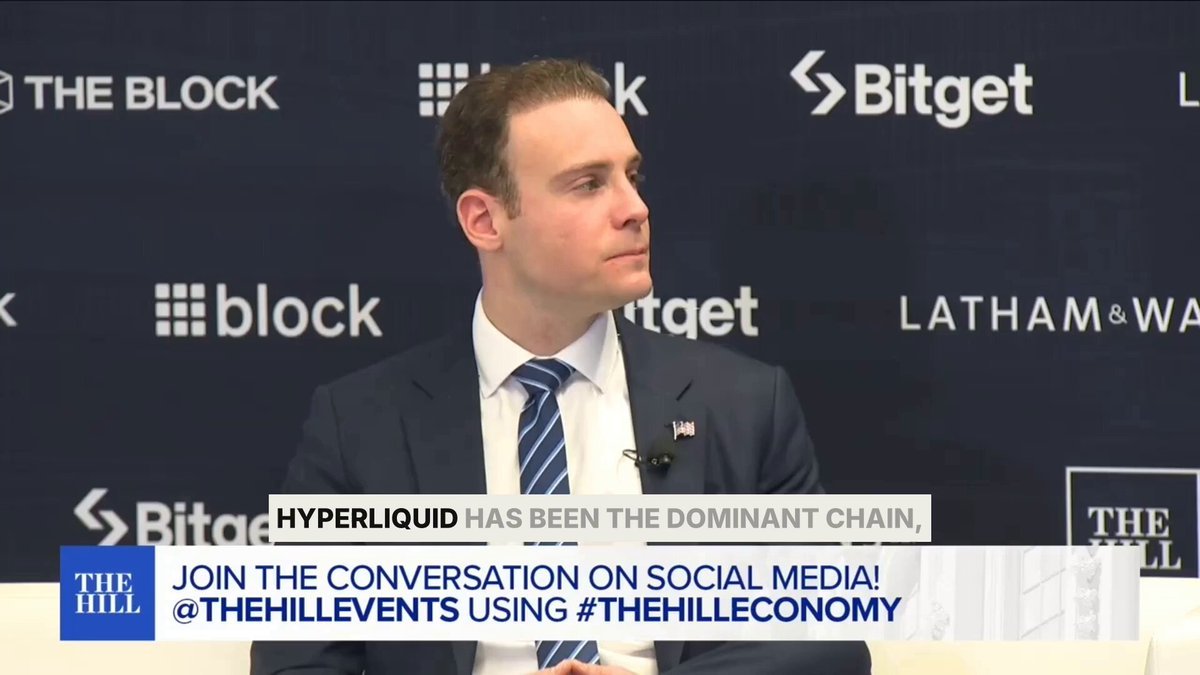
Platforms seeking to offer onchain perpetual futures to U.S. retail traders must register as exchanges or partner with existing licensed venues, Commodity Futures Trading Commission Chairman Michael Selig said at the Capitol Crypto Forum in Washington, D.C. Speaking at the event hosted by The Hill and The Block, Selig emphasized that such platforms must abide by the same rules as traditional exchanges while continuing to leverage blockchain technology.[3][4][2]
When asked how decentralized trading platforms such as Hyperliquid could compliantly enter the U.S. market, Selig pointed to Backpack as an example of direct registration. Backpack recently secured approvals across three licensing categories: Futures Commission Merchant, Designated Contract Market, and Derivatives Clearing Organization. Selig noted that alternative venues are pursuing partnerships with licensed entities to enter the market and advised observers to stay tuned regarding other protocols.[1][3][4]
Selig also addressed contract structures and jurisdictional issues, observing that a single-stock perpetual contract is not automatically a security-based swap simply because it lacks an expiration date, noting that classification depends on structure and that perpetual funding rates resemble traditional futures variation margin settlement. In addition, Selig said the CFTC intends to work alongside the Department of Justice to defend federal regulatory oversight of lawful derivatives contracts against state lawsuits involving prediction markets.[3]
Key facts
- CFTC Chairman Michael Selig said platforms offering onchain perpetual futures to U.S. retail traders must register as exchanges or partner with licensed exchanges.
- Selig cited Backpack's approvals as a Futures Commission Merchant (FCM), Designated Contract Market (DCM), and Derivatives Clearing Organization (DCO) as one compliant model for U.S. entry.
- When asked about decentralized venues such as Hyperliquid, Selig said other platforms are pursuing partnerships with registered firms and urged observers to stay tuned on other protocols.
- Selig stated that single-stock perpetual contracts are not necessarily security-based swaps purely because they lack an expiry date, noting perpetual funding rates resemble variation margin settlement in traditional futures.
- Selig indicated the CFTC would coordinate with the Department of Justice to defend federal authority over lawful derivatives contracts against state lawsuits targeting prediction markets.
Sources · 3 sources
- TB
The Block@TheBlockCoPost on X ·
What would a compliant pathway look like for a decentralized platform like Hyperliquid to enter the U.S.? @CFTC Chairman @ChairmanSelig points to Backpack, which he says was approved this past week, and says "stay tuned" when it comes to other protocols and exchanges. https://t.co/VdhLrDwmmH
Open source - TB
The BlockArticle ·
CFTC Chair Selig outlines how Hyperliquid and other onchain venues could enter the US Michael Selig said platforms like Hyperliquid have two ways to enter the U.S. retail market and must follow the same rules as other exchanges
Open source - WB
Wu Blockchain@WuBlockchainPost on X ·
CFTC Chair: Onchain Platforms Like Hyperliquid Must Register or Partner With Licensed Exchanges to Enter US Market, Citing Backpack Model CFTC Chair Michael Selig said onchain platforms such as Hyperliquid must register as exchanges or partner with registered exchanges to offer derivatives to U.S. retail users. They must follow the same rules as traditional exchanges but may still use onchain technology. He cited Backpack, which recently secured futures commission merchant (FCM), designated contract market (DCM) and derivatives clearing organization (DCO) approvals as a compliance basis for entering the U.S. market. On prediction markets, Selig said the CFTC would work with the Justice Department to defend its federal authority over lawful derivatives contracts against state lawsuits. He also said a single-stock perpetual contract is not necessarily a security-based swap simply because it has no expiry date: its classification depends on its structure, and perpetual funding rates resemble the variation margin settlement used in traditional futures.
Open source - TB
The Block@TheBlockCoPost on X ·
THE BLOCK: CFTC Chair Michael Selig said at the Capitol Crypto Forum that platforms seeking to offer onchain perpetual futures to U.S. retail traders would need to register as an exchange or partner with one. Asked about Hyperliquid, he pointed to Backpack's recent approval as one route and said to "stay tuned" on other protocols.
Open source